
Edited by
M. Ibrahim

Reviewd by
Abdul Qadir

Edited by
M. Ibrahim
Reviewd by
Abdul Qadir

You don’t need a website to do affiliate marketing. You can recommend products and get a commission if they make a sale if you have useful content, a niche and an audience that you can reach. Learning how to start affiliate marketing without website access is particularly useful for beginners who wish to test an idea without spending money on web hosting, web design and other expenses associated with the website.
The essence of the business is easy to explain: pick a niche, sign up for an affiliate program, provide valuable content, insert affiliate links (where permitted) and attract the right audience to that content. The hard thing is making the link. It’s gaining visibility and credibility to drive clicks and sales.
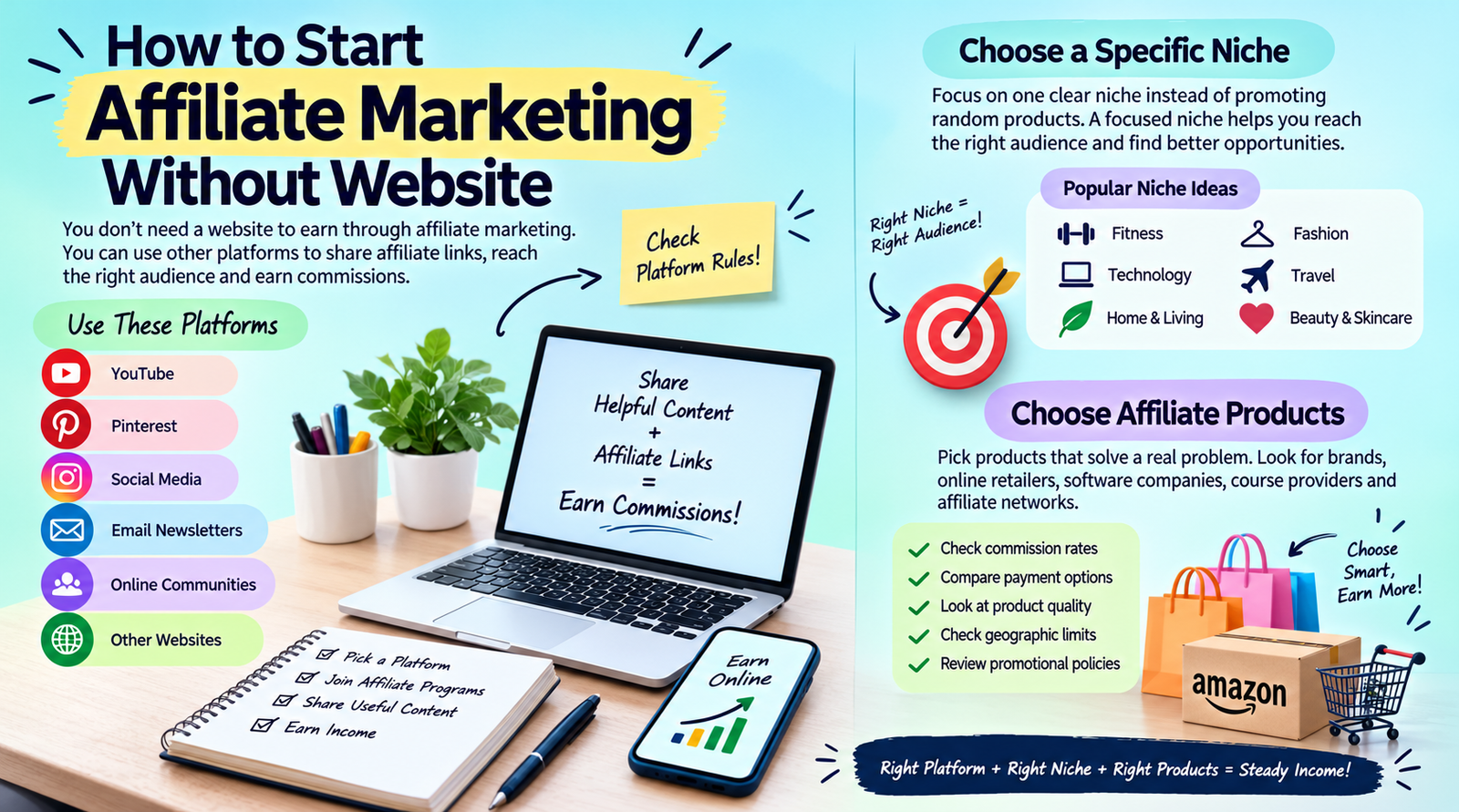
It’s not essential that you have a blog in order to start. You must have a hosting system that you can post informative information on and interact with possible purchasers.
A beginner may utilize YouTube, Pinterest, social media, email newsletters, online communities or other websites that enable affiliate content. The rules governing each are also different, so be sure to review the platform’s current rules before posting links. Incomrise demonstrates how to earn money online, create side hustles and leverage digital tools for modern income generation.
Begin with a single, definite line of merchandise as opposed to a random line of products. For those who intend to create a blog in the future, knowing how to pick a blog niche can assist them in picking a topic that has a clearly defined audience and product opportunities.
For instance, if you are a beginner looking for fitness, you might consider home fitness, budget-friendly fitness gear or fitness applications. If the person is interested in technology, he or she can check out budget headphones, productivity software or helpful mobile applications. When you have a niche, it will be easier to develop content that is relevant to your niche and attract your niche’s audience.
Find products that address a true need of your audience. Brands, online retailers, software companies, course providers and affiliate networks are all sources for affiliate programs.
A number of affiliate marketing platforms for beginners feature big retail affiliate programs and networks that are established. Research the commission structure, payment options, quality of products, geographic limitations and promotional policies before joining.
For instance, Amazon Associates will earn commissions on purchases made through their affiliate links. Commission rates are different for different types of products. Please don’t choose a product because it has a high commission. If a product is not in line with an audience, then it’s a product that doesn’t make sales and doesn’t make sales.
The best way to go is to select one traffic channel and get to know it before going all in on all of them.

Use YouTube for product reviews, tutorials, comparisons, demonstrations and educational videos. For instance, a content maker who specializes in home offices might create a video that compares the three budget microphones. The video can make the difference, demonstrate the products and direct interested viewers to permitted affiliate links.
To answer the question of how to do affiliate marketing with YouTube without a website, make useful videos, get viewers to trust you and put links in appropriate places like the description or channel areas.
Affiliate content is permitted on YouTube, though too much of it may be considered part of their spam policies. YouTube’s link guidelines will also need to be adhered to by external links.
Pinterest is great for fashion, home, recipe, travel, craft and beauty. Rather than just adding a product link to pins, add valuable pins that address a problem. For example:
The content has something to offer people to click. If there are direct affiliate links, the pin can direct to the specific product or offer.
There are multiple methods on social media for building an audience. Any short videos, carousels, stories, product demonstrations or educational posts can help with affiliate marketing. It’s not the idea to post sales articles every day. Useful information is attention-grabbing. Then product recommendations are included in that content.
This is a distinction between these two approaches. Affiliate marketing without a website is a term used to describe when you are promoting products on other platforms, but don’t own a website. Other options include YouTube, Pinterest, Instagram, email or other avenues.
Affiliate Marketing No-Blog is the concept of affiliate marketing without a blog. A blog doesn’t have to be a part of affiliate marketing. A blog is optional when you start, but learning how to monetize a blog can become useful once you want more control over your content and traffic.
However, affiliate marketing without a website or social media takes out two of the more popular traffic generation methods. Then you have to use other methods like email marketing, forums that allow links, communities, messaging groups, or pay for ads.
Once you have selected a platform, concentrate on content that assists people in making decisions.
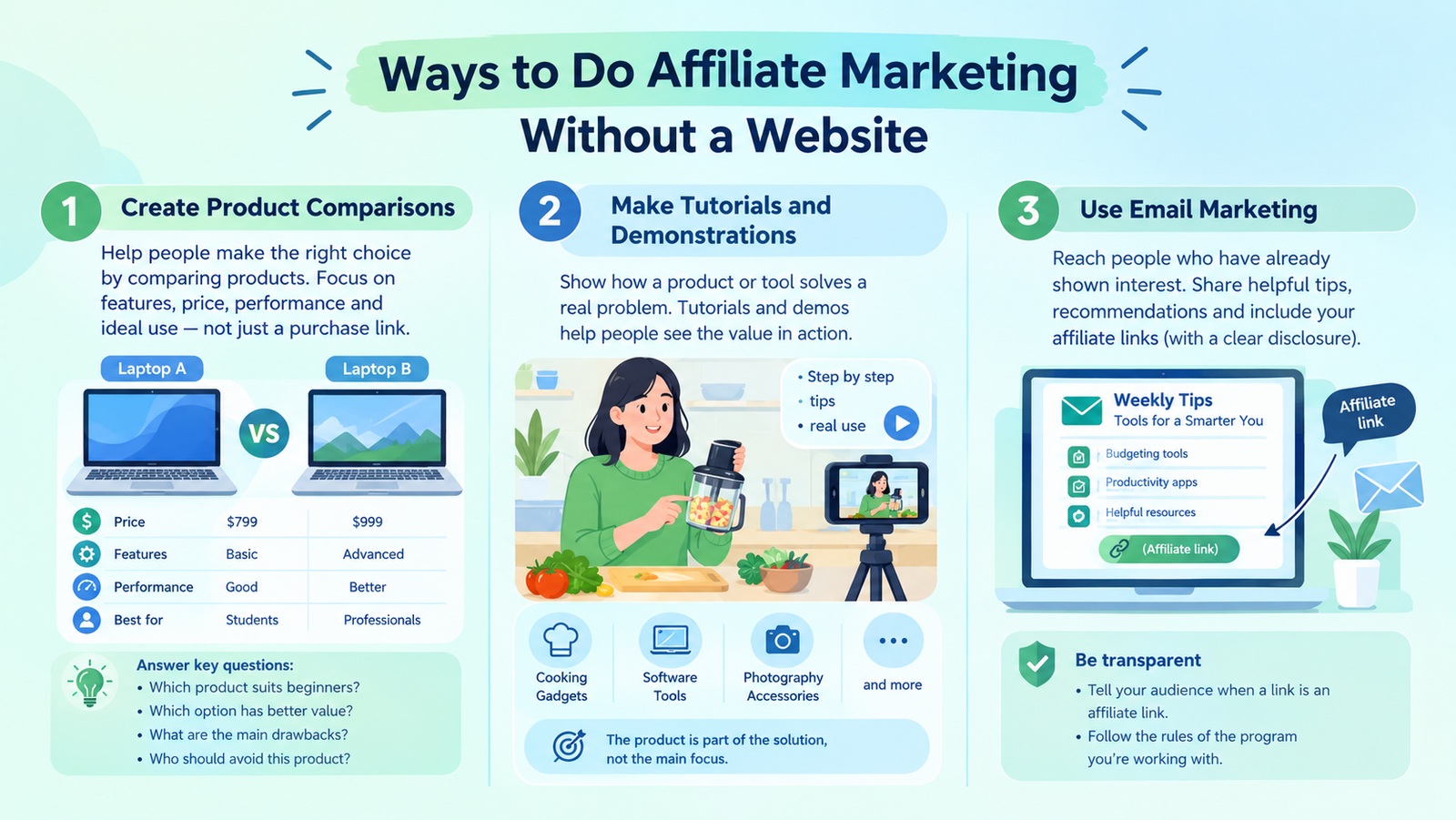
When customers are in the position to make a purchase, they may be searching for comparison content. Rather than saying, “This is the best laptop,” describe the differences in two or three laptops in terms of their price, features, performance and ideal use.
Useful comparisons can answer such questions as:
This approach creates more trust than simply posting a purchase link.
Tutorials draw in people who already have a problem that they’d like to have solved. A kitchen expert can show how to use a kitchen gadget. A software developer can demonstrate a software application. A photographer can tell you how one of these accessories can enhance a setup. The product is not the main emphasis of the content but rather a part of the solution.
Email can be an effective channel as you’re reaching out to people who have asked to hear from you. For instance, if you’re creating a personal finance newsletter, you can include a weekly email that talks about budgeting tools. The technology creator can provide valuable software suggestions. When using affiliate links, make it clear that the link is an affiliate link and adhere to the rules of the affiliate program.
Traffic is the fuel that drives affiliate sales. Having good content does not necessarily mean that it will get clicks. Understanding how to get blog traffic can also help bloggers know how to draw in visitors who are more likely to interact with their blog and recommendations.
Some of the best affiliate marketing traffic sources are:
Use 1 or 2 channels. Analyze what topics get views, clicks, comments, saves or other positive engagement. Then make more of what people are going to respond to.
Audience growth starts with consistency and usefulness. Choose an audience and discover their desires. Look for content ideas in search comments, community discussions, platform search suggestions and frequently asked questions.
Then create content that answers those questions. For instance, if you are in the niche of cheap skin care, you can write about the advantages of using affordable skin care products. Rather than writing “buy this moisturiser”, make posts like:
“Best moisturizers for dry skin under $20”
Make an honest comparison of the products, suggest to whom each product is suited, refer to any limitations and include relevant affiliate links as may be permitted. It is an effective way to provide valuable information to people prior to asking them to purchase.
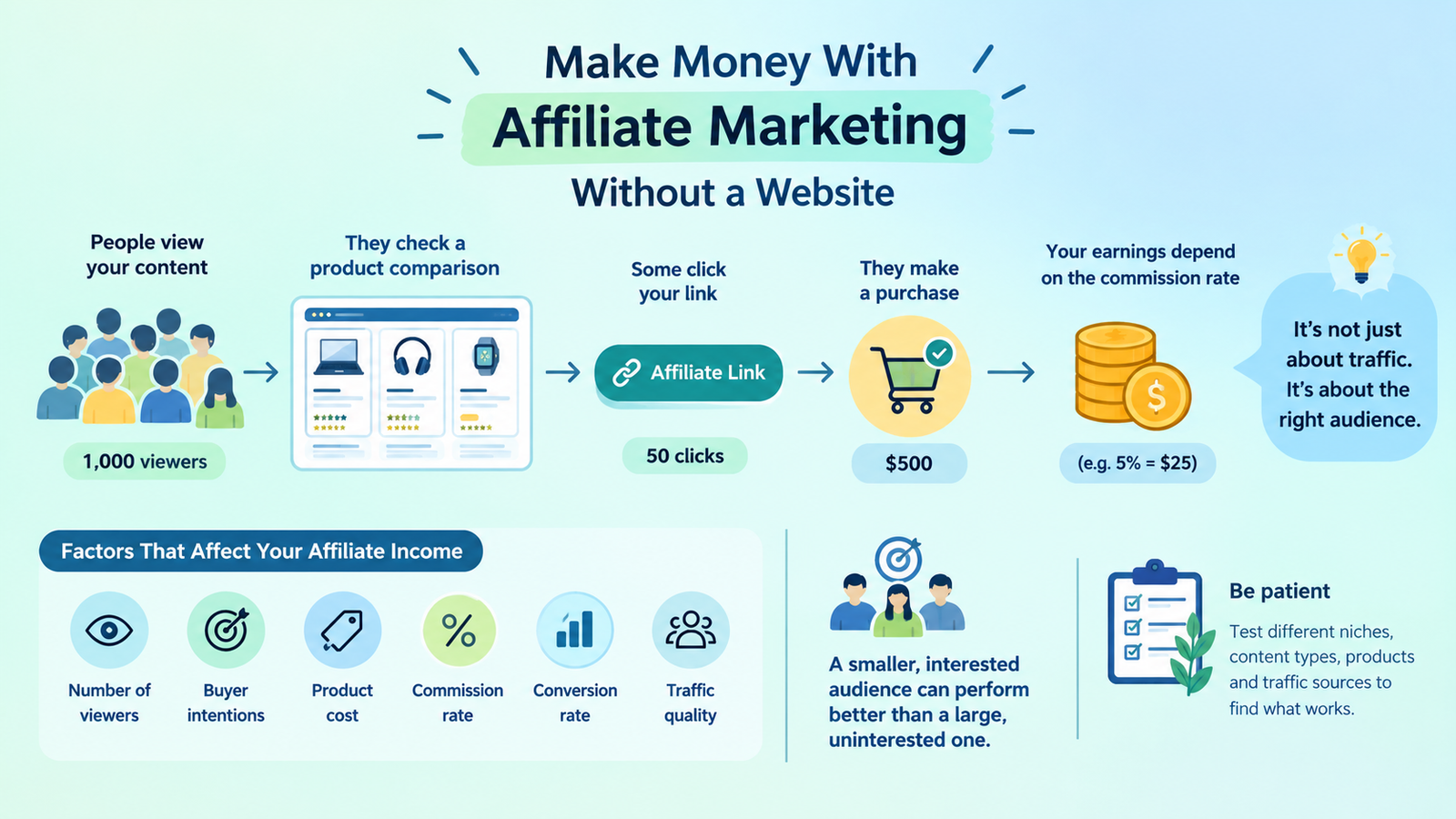
There are a number of factors that affect affiliate income, including the number of viewers, the buyer’s intentions, the cost of the product, the commission rate, conversion rate and the quality of traffic. Suppose that 1000 people look at a comparison of products. For example, if you have 50 people click your affiliate link and make a $500 purchase, then the amount of money you make will depend on the commission amount for that program.
That example demonstrates how not only is traffic not sufficient, but it can also be wrong. It’s possible that a small group of customers who are very interested in buying performs better than a big group of customers who aren’t interested in buying. Don’t expect to get a quick return on investment. For new creators, there is a process of testing out niches, content types, products and traffic sources in order to find a mix that is successful.
It will depend on the platform and affiliate program. Links can be added in Approved YouTube Descriptions, Permitted Social Posts, Social Profiles, Emails (Newsletters) and other links that are permitted in commercial links.
Never post the same link in different groups, comments or communities. Such an action can be perceived as spam and impact trust. Rather, it’s better to write something helpful before introducing the affiliate link.
You don’t need to have a website to get into affiliate marketing. It begins with a helpful suggestion, the proper audience and a platform where you can regularly share helpful content.
If you are new to the concept of how to start affiliate marketing without a website, then start with one niche and one traffic source. Write honest reviews, comparisons and tutorials without relying solely on links. Once your audience expands, you’ll have the opportunity to try out additional products and channels.
A site can be valuable later, particularly in that you’re able to have more control over search traffic and your content. However, it’s not the only way to earn affiliate revenue. A focused approach can help you make small steps, find out what works and go from there.
Yes. You can reach others via YouTube, Pinterest, social media, email and other channels that allow for affiliate promotions.
Yes, but there are traffic, audience trust, product demand, commission rates and conversions to consider. No fixed income.
Yes. There are alternatives like email marketing, communities, YouTube, Pinterest and more traffic sources. Before sharing affiliate links, make sure to review the rules of each platform.
There should be clear disclosure of the affiliation, if there is one. The FTC suggests that the financial connection be easily visible and apparent to viewers.