
Edited by
M. Ibrahim

Reviewd by
Abdul Qadir

Edited by
M. Ibrahim
Reviewd by
Abdul Qadir
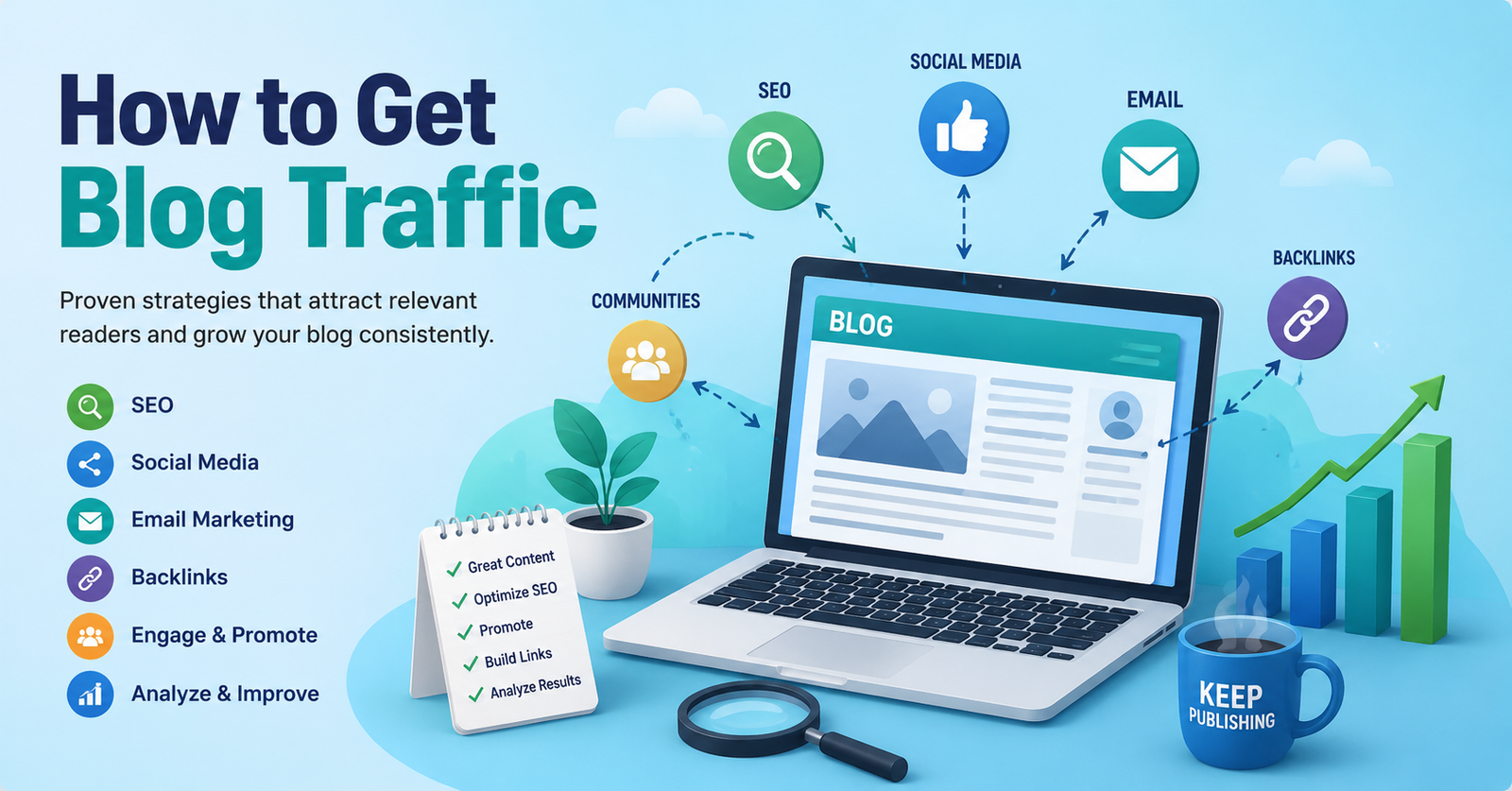
Creating a valuable blog post is just half the work. The more difficult part is to ensure that the right people locate it. For those who are wondering How to Get Blog Traffic Fast, it’s not a single magical potion. Sustainable traffic is generated through a combination of content creation, SEO, promotion, social media, e-mail, internal links, referrals and backlinks.
A new blog does not get a lot of traffic right off the bat. Search engines have to discover your content and understand it and the readers have to have a reason to trust your website. Don’t wait for visitors; make a basic system that continually places your content in front of the people who want it.
Low traffic doesn’t mean that your writing is poor. Other issues can occur with your blog.
You may be covering topics that have a low search volume, you may be targeting existing websites, or you may be writing a very general piece that doesn’t solve a specific query. Sub-optimal navigation, lack of internal links, slow page speed and a poor mobile experience can also make your site cumbersome.
Another common error is writing one article and going on to the next without marking it published. Great content is not enough; it must be distributed. We’re not just about luck or waiting for Google traffic at Incomrise; we’re about implementing actionable strategies that will bring in relevant visitors to your blog or online content.
Don’t rely solely on Google; build multiple traffic sources first.
Organic search: Users click on your content that they find via a search engine. Focus on particular topics and questions that your target audience is looking for.
Social media: Communicate valuable content from your articles through social media channels where your audience is.
Email: Share new posts, tips, guides and helpful resources with those who have opted in to receive them from you.
Referral traffic: People come in via links from other sites, newsletters, publications and online resources.
Direct visitors: They come to your site via a URL, bookmark, or by directly entering your site.
Online communities: Respond with accurate information to questions that are raised in the online community. Only share your article when it’s of value.
Guest posting: Provide articles of value to websites that are relevant and gain links to your content.
Backlinks: Other websites link to your pages. Any editorial link that is relevant will introduce new readers and help bolster your site’s authority.
Don’t use all channels at once. Select those that will be suitable for your audience and resources.
The initial stage of traffic is picking the right topics.
Get your audience’s attention before writing! Search volume is not the only factor to consider, but keyword research tools can show you search phrases and related questions. It’s important to know what people are searching for too.
Read the pages that are displayed for the target word. Look for gaps. Do you have a more precise definition of the topic? Are there examples or personal experience you can add that the other pages don’t mention?
According to Google, content makers should prioritize creating content for human readers and not for search engine users.
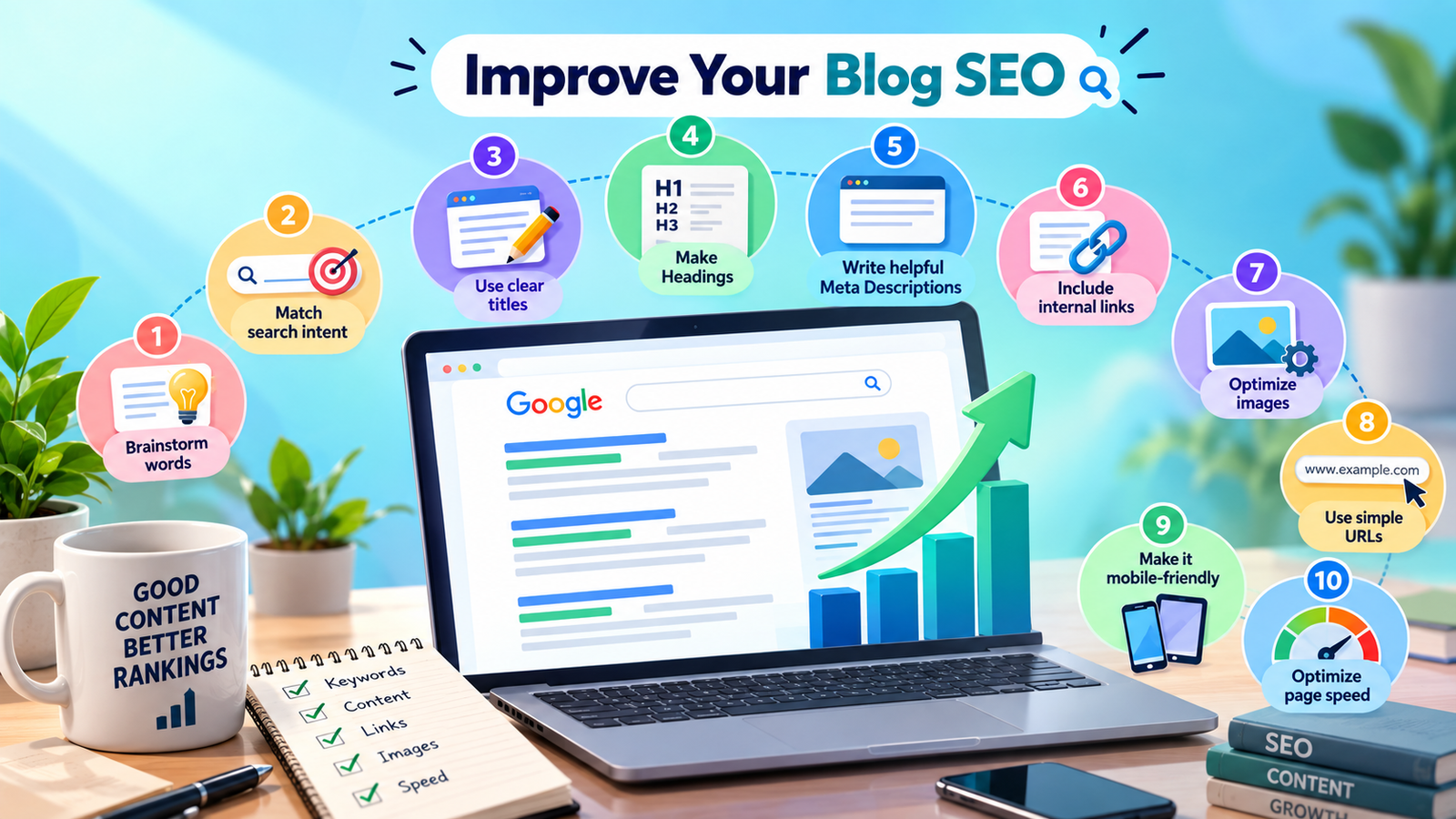
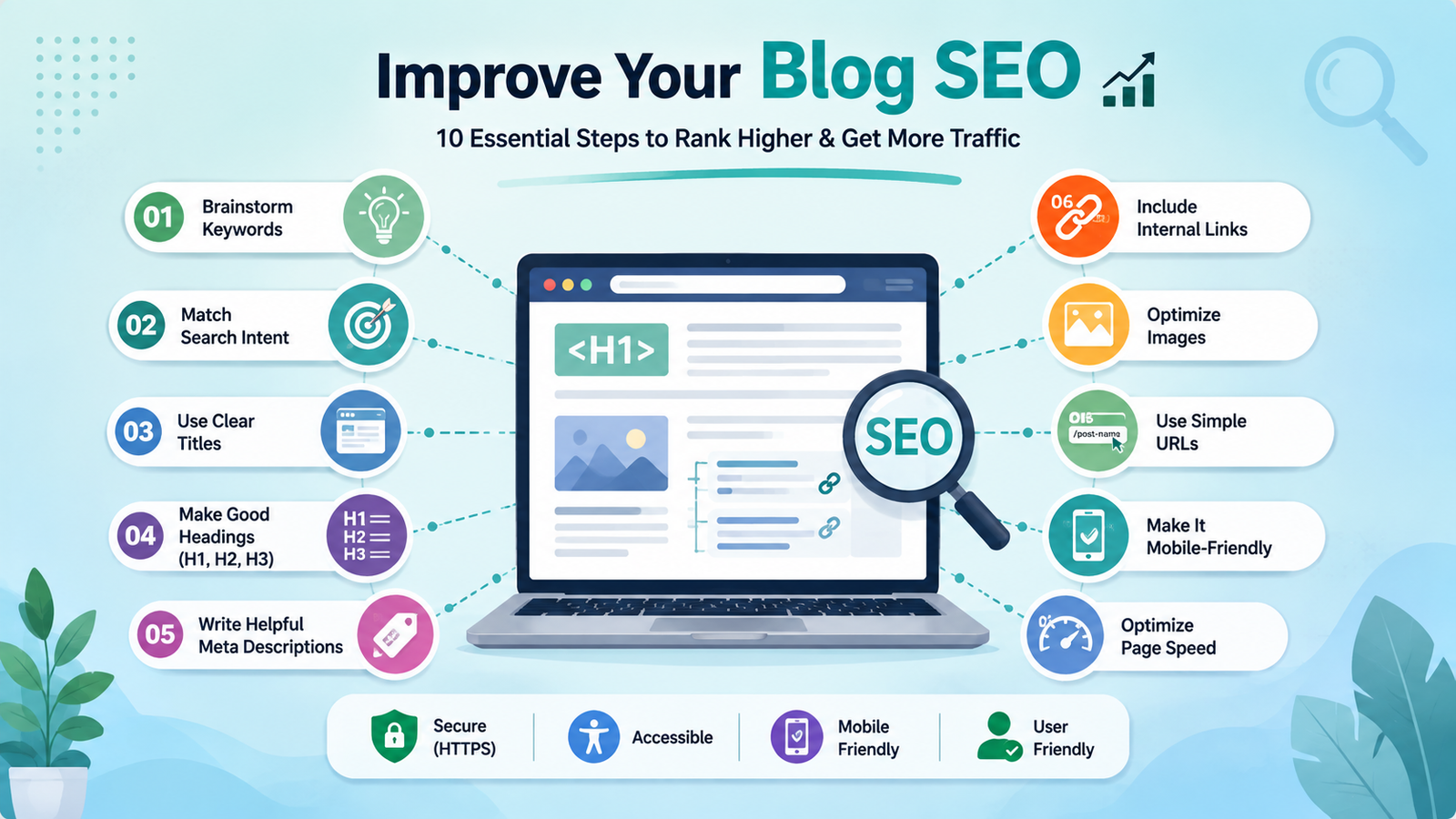
SEO enables search engines to comprehend your pages and assists people in finding pertinent content. A good grasp of the basics doesn’t require any advanced technical knowledge. The first steps to follow are:
Google has been suggesting making websites secure, accessible, mobile-friendly and user-friendly as they create useful content.
Having a consistent blog increases your chance to draw readers. It also aids you in building your authority about a specific topic. Not all the time everyday! It’s not about churning out a ton of articles in a short period of time and then going silent.
There is no best length for word count that is guaranteed for search rankings, either. Google has clarified that there is no set word count required for content to do well. Use the topic to structure the essay without excess paragraphs.
There’s more to publishing than just that. Use channels to share each article that are appropriate for your audience. Create brief social media posts, a checklist, an email or a video idea for the main ideas. When using a link to promote, it’s best to give the person something useful, rather than repeating that link over and over again.
Don’t be on all social networks. Identify platforms depending on their audience. A food blogger might want to utilize visuals and a B2B writer might want to make use of professional platforms.
Rather than posting a comment such as “read my new article”, post a helpful tip from the article. The interested person can then go to your blog and read the whole article. This is one of the ways to get traffic to your blog without solely depending on the search engines.
Email provides you a direct line of communication to individuals who already showed an interest in your material. Include an easy sign-up form on your site. Provide a relevant incentive for visitors to sign up, like a checklist, template, helpful hints or updates. Make your email content useful. If a subscriber keeps getting valuable info, then there is a reason for him or her to open any future messages and resume visiting your site.
Internal links are links to other pages on your blog, which help readers find more information. Let’s say that you have articles on freelance writing jobs, freelance rates and writing proposals. These pages can be linked to one another, providing a clearer path throughout your website. Internal links also assist the search engines in understanding the relationships between your pages. If you publish a new article, look at older articles that are similar and link to the new article.
Backlinks are links from other sites to your site. They will respond best to a truly helpful publication. Other sites may be inclined to cite your work because it contains original research, in-depth guides, statistics, tools, templates and practical resources.
Another effective strategy is to write for other sites that are relevant to your niche and engage in some niche collaborations with creators. Don’t buy lots of low-quality links and don’t put links everywhere. Prioritize building the right kind of relationships and content.
You have content that can be a source of extra traffic. Go through previous articles and find pages with impressions but low click-through rates. Revise and make clear poorly written parts, fill in missing material, enhance internal links, update and enhance examples as needed and enhance titles as needed.
Don’t edit an article’s date to make it look like it’s new. Google recommends you not change the date without adding to your content.
Google Search Console is also a great source for discovering queries and pages that already get search impressions and clicks. If you’re aiming for the make money on blogging target, you will have more content to work with if you publish on a consistent basis.

When you’re beginning to learn how to get traffic to a new blog, begin by having a strategy that’s focused. Select a clear niche and topics that could be realistic. Focus on specific search terms and not on competing for the top of the organic search results.
Then:
It takes time to gain search visibility and authority on a new website. Don’t decide to read the rest of the blog based on the first few weeks. When you’re not used to having visitors flock to a new blog, it is best to begin with a specific approach and master the fundamentals of how to start a blog before you publish any content.
No absolute time limits. It takes time for a new website to be found, indexed and rated. If you pick a competitive topic, it may take longer for it to be known and if you choose a low-competition topic, it might start getting traffic earlier.
Use the number of impressions, clicks, referrals and repeat visits as a way to track progress, not the number of traffic. When a topic begins to hit the right audience, build on the topic. This makes it easier to grow blog traffic by tapping into topics that your audience needs.
So, how to get traffic to your blog consistently? Create a system rather than hope for one article to go viral.
Select topics that your audience is looking for. Produce valuable and relevant material that aligns with the search intent. Learn basic SEO, add related posts, promote all articles, create an email list, get good backlinks and polish up older articles.
If you are new to blogging, get a few realistic topics and do them well. Know where visitors are reading your site, what works best and what to write next.
Go through specific topics, useful content, basic SEO, internal links and consistent promotion. Identify a handful of traffic sources that align with your audience and enhance them over time.
It will depend on niche, competition, content quality, website authority and promotion. Be patient with new blogs, as it takes them time to gain search visibility.
Leverage organic search, social media, e-mail marketing, internal linking, guest blogging, community engagement and content creation yielding relevant backlinks.
When you are looking to increase the traffic to your WordPress blog, you need to begin with easy categories, readable URLs, optimized images, simple navigation, internal links, mobile-friendly pages and great site performance. WordPress has the ability to change the structure of its URLS for better readability.