
Edited by
M. Ibrahim

Reviewd by
Abdul Qadir

Edited by
M. Ibrahim
Reviewd by
Abdul Qadir
One of the big ways to make your own schedule jobs is with the smartphone camera. Every day, millions of people have a good camera in their pocket. People earn real cash by taking photos with their phones for stock photo sites, brand content firms and AI training providers. No studio. No DSLR and no regular fixed time client meetings.
This guide explains which platforms pay the best, how much you can earn, and how to start your mobile photography journey.
In 2023, the stock photo industry brought in a total of $4.1 billion. An increasing portion of that demand is now willing to accept images from a smartphone. Even those who buy, blog, own a small business, or are app developers are looking for real, natural images over studio shots.
There are 3 reasons why phone photography is ideal for make your own schedule jobs perfectly:
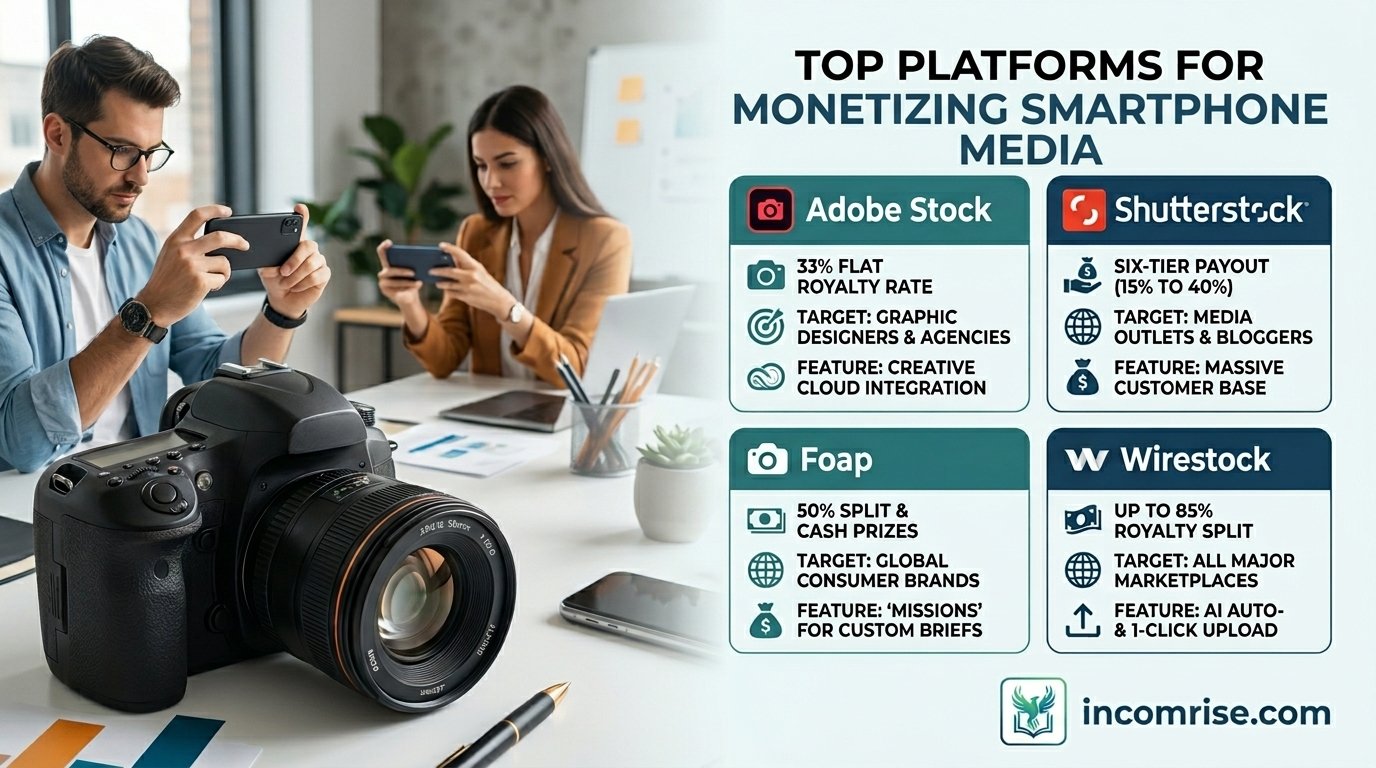
The rates of different digital marketplaces differ, and they each have different customer bases. To achieve success in these make your own schedule jobs, it is important to understand the strategic placement of certain types of imagery. Here are the Secret Websites to Make Money Online to manage your daily expenses.
| Platform Name | Payout Structure | Target Audience | Key Operational Feature |
|---|---|---|---|
| Adobe Stock | 33% flat royalty rate | Graphic designers and enterprise marketing agencies | Direct integration into the Adobe Creative Cloud ecosystem |
| Shutterstock | Six-tier structure (15% to 40% earnings) | High-volume media outlets and global bloggers | Massive customer base with billions of historic downloads |
| Foap | 50% split on standard sales | Major global consumer brands | Regular “Missions” with fixed cash prizes for custom briefs |
| Wirestock | Up to 85% royalty split | All major marketplaces (Adobe, Shutterstock, Getty) | One-click upload: AI automatically handles tagging and distributes photos to 10+ sites |
Consistency is a key point in making photography jobs functional, make your own schedule jobs. Uploading images that are not edited on a random basis will bring no monetary benefits.
Look into the native camera setting and activate the RAW mode. Set the 3×3 composition lines to make sure you have a level horizon and follow the rule of thirds.
Pay attention to honest human gestures, a variety of work environments, interesting architectural details and true local life scenes. Do not overshoot or overproduce the shots.
Export RAW images to mobile apps such as Lightroom Mobile or Snapseed. Fine-tune exposure, color and balance highlights without destroying presets.
Use 15-25 very descriptive keywords when uploading the file. Use the terms related to location, mood, colors and items to make it discoverable.
Compliance with intellectual property law separates amateur uploaders from professional content creators. Failure to follow licensing protocols results in immediate account termination.
The Universal Release Mandate: Commercial distribution of any image containing a recognizable human face or private property requires a legally binding, signed model or property release form.

If you view selling photos as make your own schedule jobs, you will think too much about the size of your portfolio. If you have just 20 photos in your portfolio, you will barely be making any money. Professionally managed mobile contributors manage thousands of searchable resources in large portfolios.
Here are some data-driven strategies to maximize earnings:
Breaking into the highly competitive stock media market comes with its own set of challenges. Understanding these hurdles is critical for your long-term profitability.
Millions of landscapes are provided as stock in stock databases. To be successful, niche in marketable areas like macro industrial textures, concepts for sustainable technology, realistic remote work scenes, etc.
| Month | Activity | Expected Earnings |
|---|---|---|
| Month 1 | 100 photos uploaded, 3 platforms | $10–$40 |
| Month 2 | 200 photos uploaded, keywording optimized | $40–$120 |
| Month 3 | 350 photos, releases obtained, AI data added | $120–$300 |
| Month 6 | 700+ photos, 4–5 platforms, consistent uploads | $300–$700 |
| Month 12 | 1,500+ photos, niche focus, AI data income combined | $600–$2,000 |
All major platform technical reviews are passed for modern flagship phones such as iPhone 14+ and Samsung S22+ and Pixel 7+. The rejection rate is based on composition and keywording, and not on device type.
Earnings for Adobe Stock and Alamy range from 30-60 days after upload. Images begin earning on Shutterstock in 60-90 days after they are indexed into the buyers search results.
Photography laws are different in each country. Photographing people in public areas is acceptable in most jurisdictions. In every case, a signed model release is necessary for commercial use of recognizable faces, no matter where.
Yes. Those who contribute between 5 and 8 hours per week can comfortably make between $200 and $500 per month within 6 months of steady uploading. Once the critical mass is achieved, you’ll get the full passive income output from part-time input.
The first step is Wirestock. 1 upload means 12+ platforms automatically, the more that’s exposed with the less time effort from new contributors.
Consistency, technical accuracy, and careful keyword optimization are key to the consistent execution of make your own schedule jobs that smartphone photography requires. People can create a viable business model by making a personal device an active business asset. Creators can find market demands, comply with legal obligations and grow their digital assets to create a stable revenue stream that they can control.