
Edited by
M. Ibrahim

Reviewd by
Abdul Qadir

Edited by
M. Ibrahim
Reviewd by
Abdul Qadir

Selecting a blog niche is important to choose and requires you to take into account your interests, knowledge, demand for the audience, competition as well as earning potential. The right niche is one that is focused enough to have a specific audience, but broad enough to have a wealth of ideas and opportunities for growth.
The issue here is that many of the beginning bloggers either select a too general topic or just go with whatever they believe they can make money on. A healthier strategy is to use a subject you are interested in, knowledgeable about, in demand and can make a profit from.
If you are still wondering about how to choose a blog niche, then this blogging niche guide will help you make a smart choice without getting too confusing.
A blog niche is basically a subject or area your blog concentrates on. Rather than writing about any topic, you decide on a specific topic for a specific audience. You can also find great practical tips on blogging, earning money online and business ideas at Incomrise.
For instance, health is the broad topic and healthy meal planning for busy professionals is the specific topic. Likewise, travel can be budget travel for solo travelers.
Niche is important because it helps readers know what your blog is about. It can also aid search engines in understanding your website and associate your content with the appropriate searches. Once you have chosen the right topic, the next step is learning how to start blogging.
The first thing to consider for how to choose a blog niche is what sorts of topics you enjoy.
Ask yourself:
You do not need to have the biggest passion for your niche. But if the excitement wanes, you should still have enough interest in it to continue creating content. Your current knowledge can also work for you, too. When you know a subject more than a beginner can, you can develop practical content that is based on real-life experiences.
Just interest is not sufficient. There must be individuals who desire to learn about your selected area.
That is where it is necessary to learn how to find a blog niche. First, do some research to see what people are looking for online. Check out Google search suggestions, forums, social media conversations and keyword research tools.
Listen for common questions and issues. When people continually request tips on a certain topic, this means there is a great audience need for the topic. A specific audience will provide you with better ideas about your content than a broad topic.

Using search demand can also determine if people are interested in your topic. Do not just look at one keyword when doing a blog niche search volume. Look for a group of related keywords that people search for.
For instance, a personal finance blog could focus on:
Having a variety of topics in a niche allows you to have a higher number of opportunities for traffic in the long run.
Meanwhile, high search volume is not always a positive thing. Extremely competitive keywords may be difficult for a new website to rank for. Sometimes it is better to start in a smaller niche where there is a steady demand.
When you want your blog to be a business, you should consider earning money from the topic before deciding on it. Aside from picking a profitable niche, you also need to know how you can make money from blogging and which ones your audience will appreciate.
When you are choosing a niche for your blog, you need to know how to choose a profitable niche. This involves finding topics that businesses are already marketing in order to connect with customers.
Some possibilities to monetise are:
For instance, there are some monetization opportunities available with topics in technology, personal finance, software, education, travel, home improvement or career-related.

Competition can be a bad thing, but it is not. Competition can even be a testament to interest in a subject and willingness of businesses to invest in it. The aim is to learn how other websites are doing things and how to offer something better and different.
Search your main topic and examine the results. Ask:
Rather than focus on a wide range of topics, try specializing. For instance, the term “photography” is too general. A topical blog, like a smartphone photography for beginners blog, may have a better chance of success.
An important thing that a new poster does wrong is to try to do it all. Food, travel, fashion, health, relationships, money and entertainment are all possibilities for a new blog about “lifestyle”. This provides you with a lot of content ideas, but it is hard to create an identity.
A niche that you are targeting will make people understand why they need to follow your site. Always add more space as you go! Focus on a specific audience and problem, develop authority and then progress on related topics.
A good niche is not necessarily a subject. It is all about the people you are looking to assist. Make a very basic image of what your ideal reader looks like before deciding on your niche.
Consider their:
For instance, a term like ‘healthy cooking’ is general. But “quick healthy cooking for college students” is aimed at a much more focused audience. You can pick article subjects, design valuable products and write articles that seem appropriate if you have an understanding of your visitors.
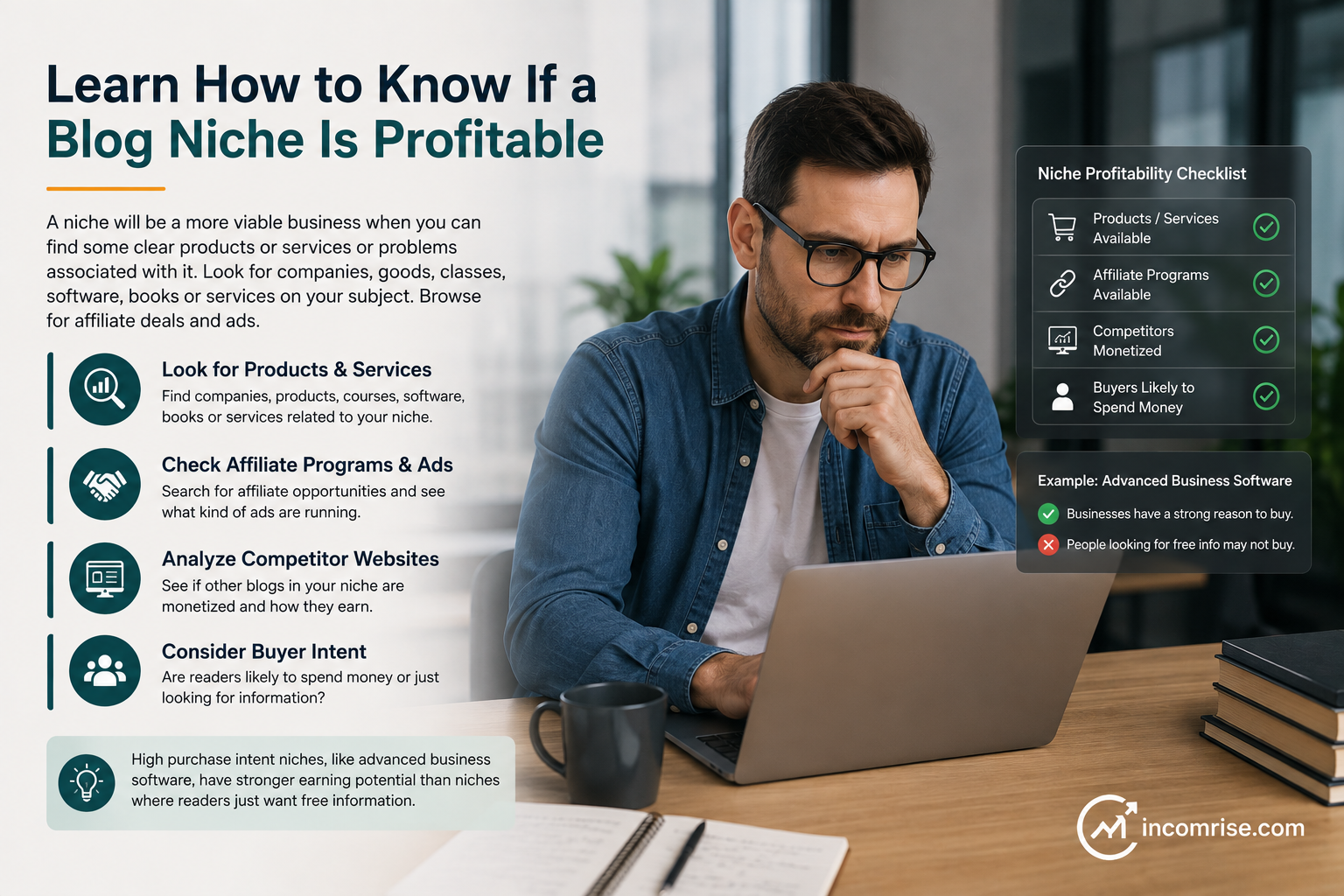
A niche will be a more viable business when you can find some clear products or services or problems associated with it. Look for companies, goods, classes, software, books or services on your subject. Browse for affiliate deals and ads.
See if there are websites for competitors that have been monetized. It is also important to take into account whether any readers are likely to spend money.
For instance, individuals looking for data on sophisticated business software can have solid business motives. A person who wants to just get the facts might not be more inclined to purchase anything.
Before putting in the time and effort into a blog, spend some time validating a blog niche. Make a list of 20-30 potential article topics. When it is easy to locate several useful questions and subtopics, it is a positive sign.
Then research:
You can even publish a couple of test articles before getting on with it. Check if people click, interact, share or look for more information about the same topic. Validation does not mean that it will succeed, but it means that you will be less likely to pick a niche just because you assumed it was a good idea.
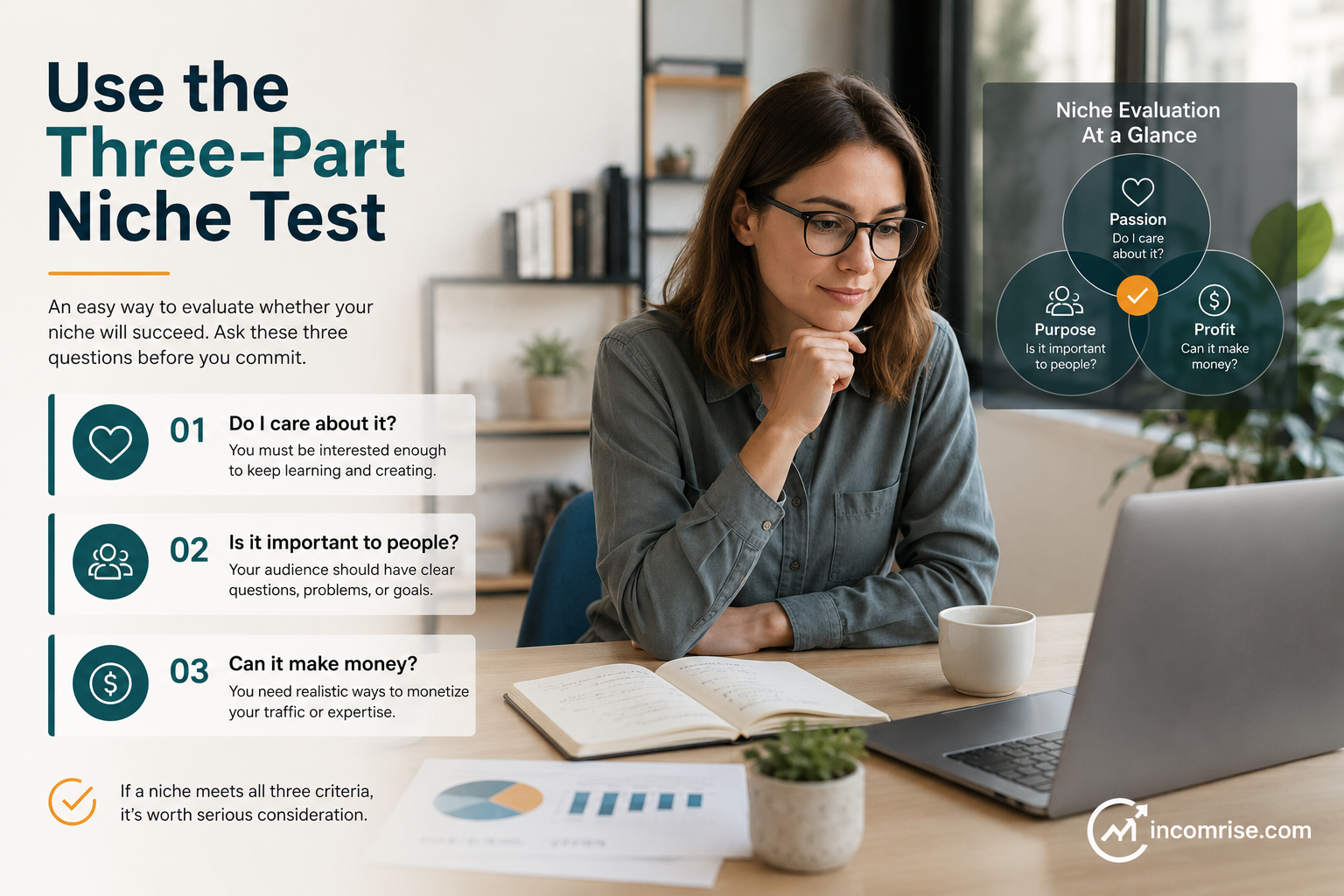
This is an easy way to decide whether your niche is going to work or not, as you ask the following questions when picking your niche.
Do I care about it?
Someone must be interested enough to go on studying and writing.
Is it important to people?
The audience should be identifiable with questions, problems, or goals.
Can it make money?
You should have some realistic means to monetize your traffic or expertise.
If a niche meets all three of the above criteria, it should be considered seriously.
You do not need to select a blog topic that is ideally suited. You want to find a niche that is both relevant to your interests and has a real audience, plenty of content opportunities and is monetizable.
When you still have a question about how to choose a blog niche, here are three things to begin with: what people need and what businesses are willing to pay for. Do your research and study the competition and search demand to test the ideas before making a final decision.
The keyword with the highest volume is typically not the most suitable. It is the one where you can create something that gives value to a certain niche and sustain a business around that niche.
Pick a subject you like to learn about and a way to support novices. As your blog develops, you have the ability to record your learning journey, conduct extensive research and develop expertise.
The first step would be to target a specific audience and problem, then validate search demand and competition, content opportunities and monetization before publishing consistently.
Pick a niche that has audience need, is monetized and matches your interests/expertise. After that, you will want to check out keywords, competition and products before you make your investment.
See if there is an interest in related topics and if there are products or services, affiliate programs, or advertising opportunities. The two key points for potential are strong demand and monetization.
Begin with a particular niche and solve a specific problem for a specific audience. A specific topic helps a new blog to gain authority and draw in appropriate visitors.