
Edited by
M. Ibrahim

Reviewd by
Abdul Qadir

Edited by
M. Ibrahim
Reviewd by
Abdul Qadir
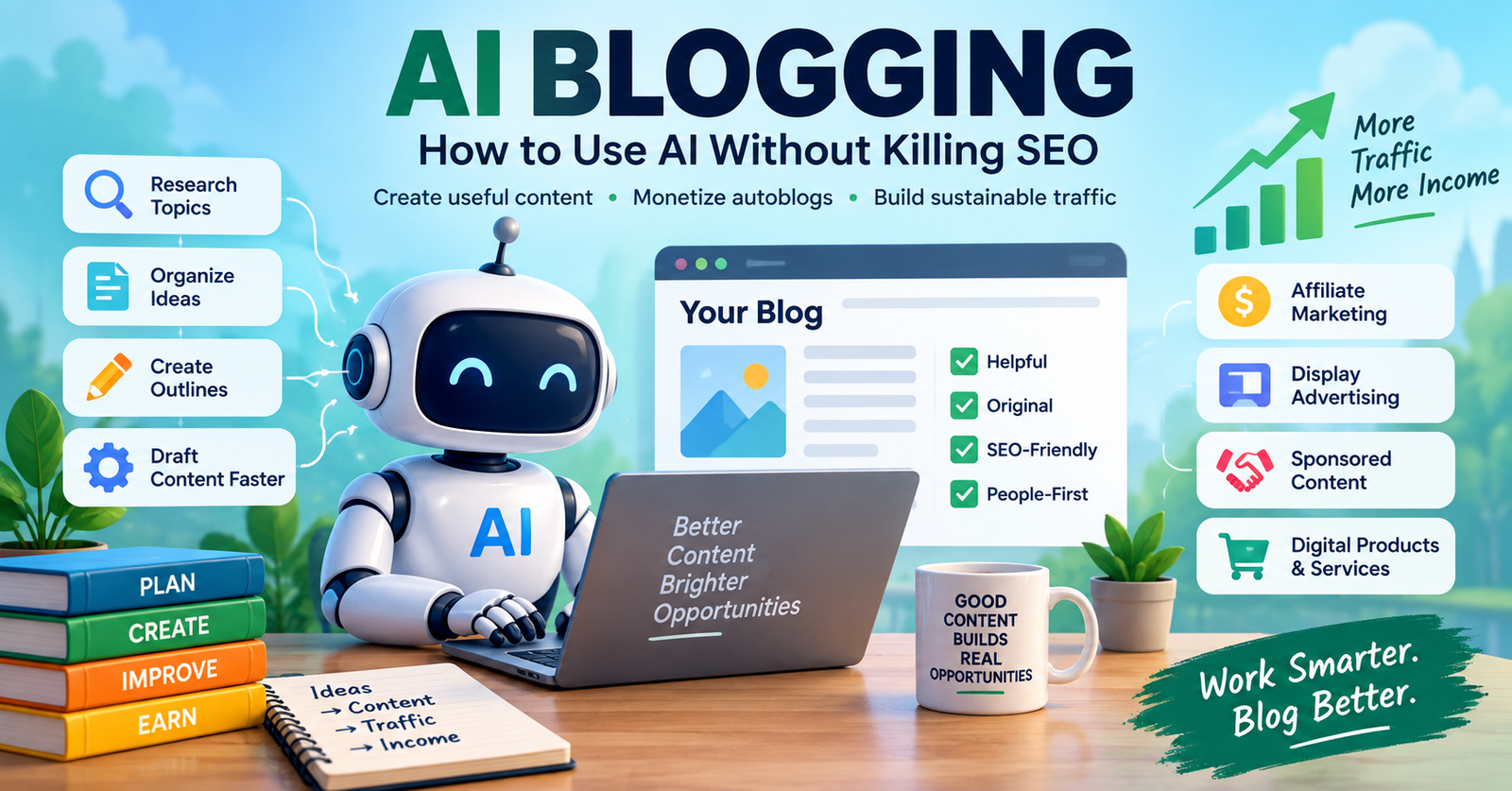
A blogger can research a topic, organize their thoughts, create a blog outline and write a first draft in just a few minutes with the help of AI. The issue begins when the purpose of the publication becomes to get it published faster instead of letting it be judged by the editor.
Then, how can you make money with autoblogs without constantly stuffing a website with duplicate and repetitive content? Getting the best of it requires approaching AI not as a tool to replace valuable information, but as a part of the publishing process. Search visibility remains as much as it relies on whether your pages have value to readers, are relevant to search intent, have original content and are accurate.
It’s a distinction that could be crucial for anyone creating a website with AI. Google doesn’t explicitly state that AI-generated content is not allowed in Search. The current guidelines have instead been geared towards spam and whether the content is primarily designed to influence rankings. Google recognizes scaled content abuse as an issue when a bunch of pages are created that have little or no value for users, including AI-generated pages.
Typically, AI blogging involves leveraging artificial intelligence to aid in specific aspects of the blogging workflow. An AI-powered blogger can help with structuring keywords, brainstorming article ideas, outlining content, summarizing information, drafting sections, or writing meta descriptions.
AI can be helpful in:
When there is a need for judgment in the content, human input is particularly helpful. It’s hard to reliably automate fact-checking, original examples, expert review, first-hand experience and final quality control.
At Incomrise, we explore practical ways to use AI, build online income streams, and grow modern businesses.
Of course, a site with automation can be found in Google Search, but automation isn’t a benefit. The published spam policies of Google are directed toward practices that exploit Search and that produce low value results. It currently includes a wide variety of unoriginal content that has been created in significant volume, in order to manipulate rankings, either with human or AI-generated or a mix of both.
The business model is usually straightforward: attract relevant visitors, give them something useful and monetize some of that attention.
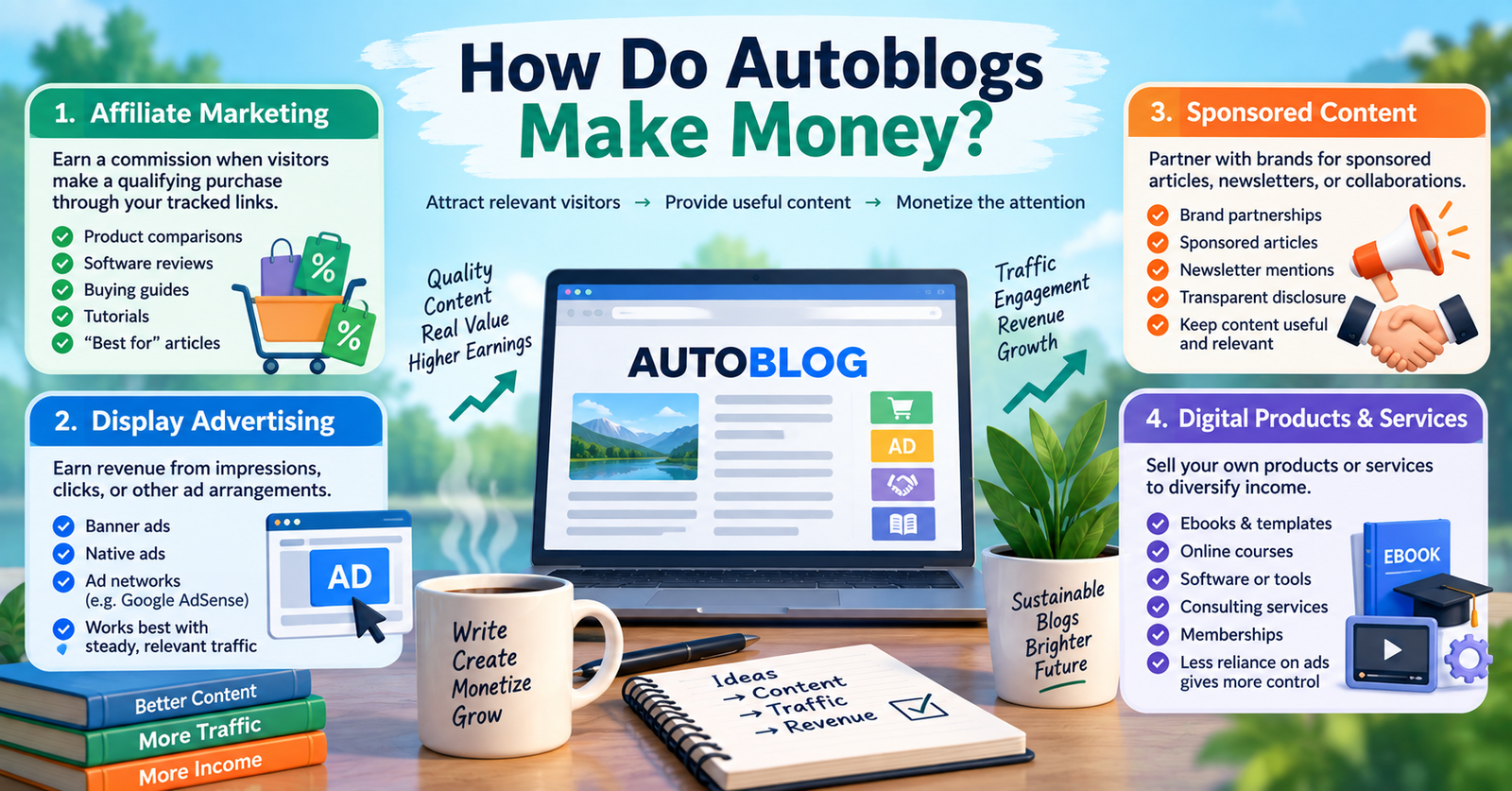
Affiliate marketing makes money when a user performs a desired action by clicking on an affiliate link and making a specific purchase. With a content website, this can perform exceptionally well when someone is making a decision.
These can be anything from a product comparison, software review, buying guide, tutorials or “best for” articles. Good autoblog affiliate marketing needs to be more than just a few links added to the product description, which is usually created by artificial intelligence. Google particularly cautions against “thin affiliation” where affiliate pages offer no original content, just copied or replicated merchant content.
Display ads can earn revenue based on impressions, clicks or other ad formats. The model is generally more meaningful as a website begins to get a regular flow of relevant traffic. There’s no magic traffic number that ensures valuable advertising income. Results vary depending on audience location, niche, the mix of devices, demand for ads, page views and user behavior.
Older sites also have the potential to generate revenue from sponsorships, brand partnerships, newsletters, paid content and more. The commercial aspect should always be clear and sponsored material should be useful to the reader. It can be detrimental to trust in the publication of weak articles that have been paid for.
Some of the products on a content site may be ebooks, templates, courses, software, consulting, memberships or anything else that’s applicable. That can be helpful because while it’s possible for advertising or affiliate commissions to be the sole source of revenue, it’s not necessary.
The first step of successful autoblog monetization is the reader’s issue, not the publisher’s need for clicks.
Promote products that you feel are helpful, using affiliate links. It can be useful to have a comparison table on a product research page. Include a software recommendation that is relevant to the tutorial. A buying guide can provide details about the importance of a given feature, as well as connect to products that are indeed suitable for the use case.
An ad shouldn’t be a hindrance to reading the page. Proceed with sponsorships but be sure to disclose them. Commercial pages should be used in conjunction with substantial informational pages and should not be used to replace them.
Google’s Search advice clearly acknowledges the proper and acceptable use of affiliate links. The problem is that it’s content that is low value and only provides something that is already present elsewhere.
The safest approach is an AI-assisted workflow with clear human checkpoints.
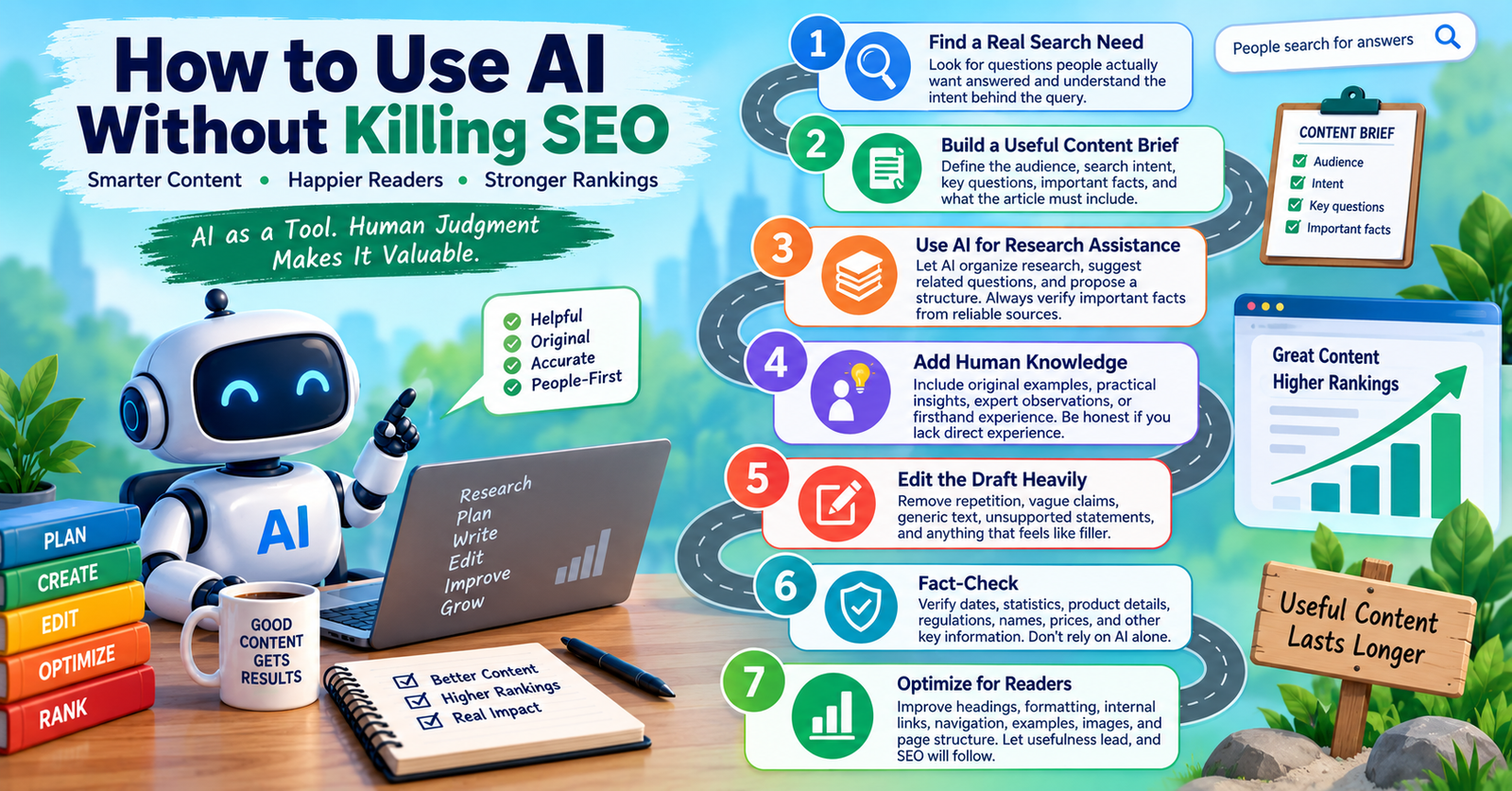
Use a question that people have that they want answered. Don’t take the volume of the keywords into account but consider the intent of the query. A person who has been looking for information about “best running shoes” might require some suggestions. If you see the query “how to clean running shoes” you most likely are looking for instructions. These are other content-related roles.
Outline the target audience, search intent, main questions, entities, important information and facts the article should feature before requesting AI to generate a draft. Writing a good brief will not let the model fill a space because he/she has to write 2,000 words.
AI can structure research and organize it into clusters of related topics, identify related questions and suggest an outline of the research and a logical structure. Some important facts remain to be substantiated. Review dates, statistics, product specifications, regulations, names, prices and other information against reliable sources.
This is where a normal AI-made article can truly come in handy. Include original comparisons, real-life examples, expert commentaries, documented testing and/or actual firsthand experiences. Be honest if you don’t have any personal experience; instead state that.
Read the article as an editor, not as the person who stimulated the article. Eliminate repetition, ambiguous claims, introductory statements, unsupported claims, clunky language and padding.
All salient facts statements should be challenged. AI can come up with confident yet flawed statements, especially if the subject is one that has a policy or product change, statistics or current events.
Make headings, formatting, internal links, navigation, examples and page structure as improved as possible. The number one rule to remember with SEO is to be useful. It shouldn’t be the same as usefullness.
The economics are based on the business, not the number of articles written. Several factors influence autoblogging income such as niche, demand for the search, competition, traffic quality, conversion rates, affiliate commissions, advertising rates, operating cost and maintenance needs. Comparing the best blog niches for making money can also help you identify topics where commercial intent and audience demand overlap.
Some of the production time can be saved by having an automatic workflow. It is not an excuse for not researching, editing, doing SEO, internal linking, promoting, performing technical tasks, updating the content and testing the monetization.
Profit is also different from revenues. Established costs, such as hosting, domains, AI subscription services, editors and writers, SEO tools, images and more can eat into the profits once the revenue hits the bank.
Hence, the business plan of “publish 1,000 articles and wait” is a feeble plan.
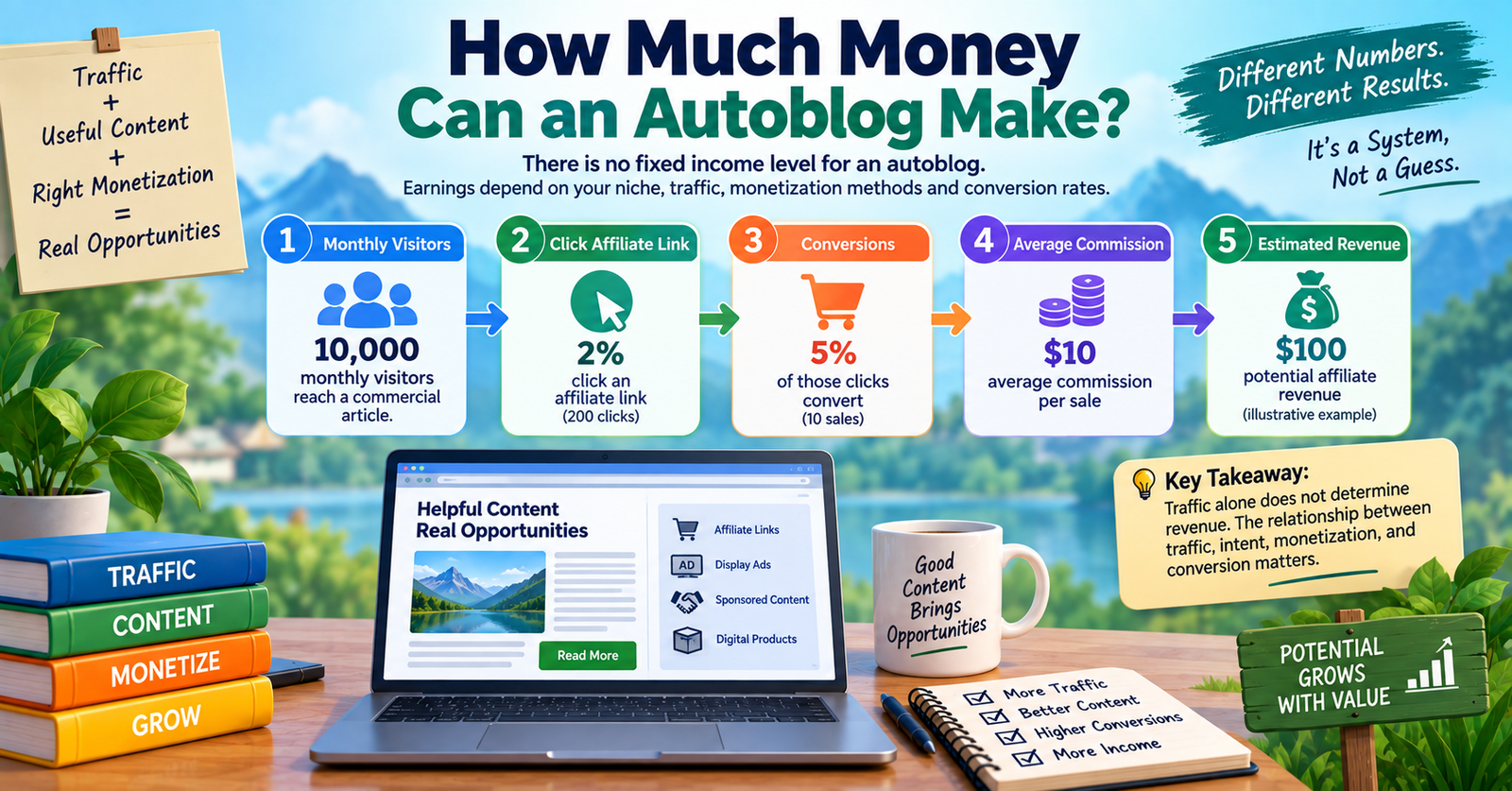
There is no fixed income level for an autoblog.
For illustrative purposes only, suppose 10,000 people visit a commercial article every month. 2% of the customers click on a link; that’s 200 outbound clicks. If 5% of these clicks convert and the average commission is $10, the resulting affiliate revenue would be $100.
If any variable is changed in the problem, the answer changes. There may be higher-value products in a different niche, or lower rates of conversion. Another website could generate more revenue from ads and less revenue from affiliates.
The valuable takeaway is that it’s not about traffic; it’s about traffic conversions. The traffic, Intent, monetization and conversion relationship is important. If you’re still deciding where to start, this guide on how to choose a blog niche can help you evaluate competition, audience demand and monetization potential.
Using AI to research, plan, draft and run a content site is so much easier. It is no less demanding to read and it is no longer weak content into a strong business.
When you’re asking yourself how do you make money with autoblogs, focus on the value proposition, not the number of blogs. Create content that addresses real questions, give information that other people are not giving, fact-check AI and use affiliate links and/or advertising only when it adds value to the business without taking away from the user experience.
The sustainable benefit is not more pages that are written by AI. It is working on creating an improved editorial system with AI.
Affiliate commissions, display advertising, sponsored content and the sale of products or services are the top choices. The best model will be determined by the niche, the intent of the audience, traffic and the capacity to offer of valuable commercial content.
It can be, but nothing is certain and profits may be great or small. The traffic, monetisation, conversion rate, content costs, software costs, competition and maintenance costs are all factors that affect revenue.
The number of deaths from overheating is not yet known with any certainty. While an autoblog can earn you a few bucks or might earn you a lot, the amount of traffic doesn’t necessarily translate into the amount of income.
Google will rank the pages of sites that use automation, but for those sites to rank there has to be quality and useful content and that the site is not violating Google’s policies. Scaled content abuse is a spam practice, according to Google, because a huge volume of low-quality content is created for the main purpose of ranking.