
Edited by
M. Ibrahim

Reviewd by
Abdul Qadir

Edited by
M. Ibrahim
Reviewd by
Abdul Qadir
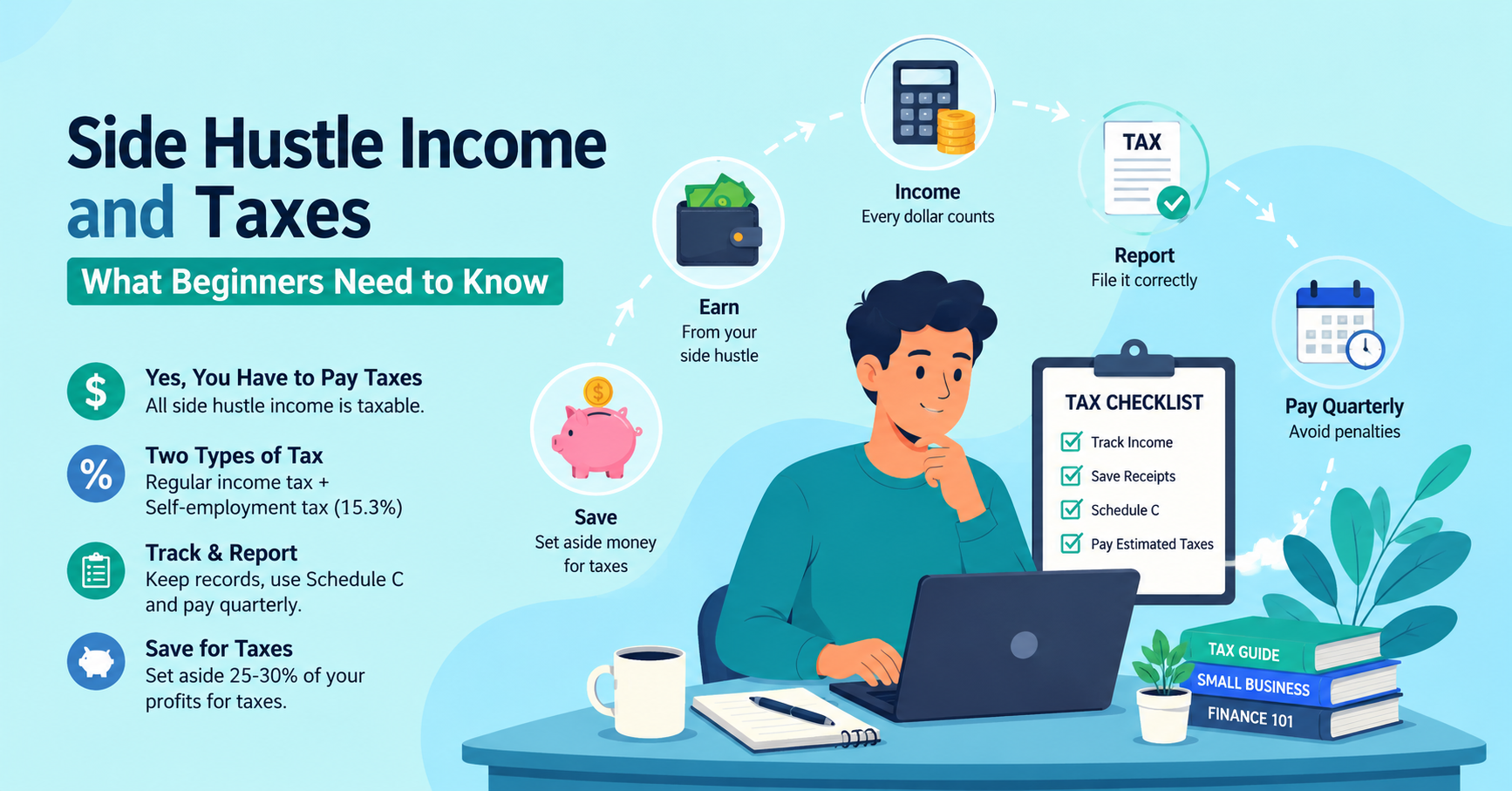
It is great to have extra money on top of your regular job. You can have a side hustle and be financially free whether you create logos, deliver pizza, or own an online business. But making extra money comes with new responsibilities. The primary challenge is to see through the Internal Revenue Service (IRS)’s eyes. While it sounds awesome, there is one area of the equation that many novice entrepreneurs neglect to consider: Side hustle income and taxes.
Many individuals start earning money online with no idea. Then, tax season comes along, and they receive unanticipated penalties. This guide will make it easier for you. Incomrise offers strategies and information on how to make online money using free AI tools.
Yes. The answer is straightforward. The IRS considers any extra income you make to be income, and income is subject to taxes. Whether you are paid cash, via an app like Venmo or PayPal, or by direct deposit is not important. Whether your side gig is limited or part-time, it’s okay. The authorities are demanding a cut in any earnings you make. If you are deciding between a side hustle and a regular part-time job, it is also worth understanding how each option affects your income and tax responsibilities.
So many novice entrepreneurs think that they do not have to pay taxes on their side income if it is less than a certain amount. This is false. No minimum amount to allow you to not report your earnings. Any income from selling handmade jewelry is counted as income even if worth just $200. The only question one should have is “How much am I liable for taxes, and how do I report it properly?”
That’s what makes it easy to draw a lot of beginner’s errors. There are two components to the tax for side hustle income.
Your extra income is included in your annual income. This includes your salary from your regular job (if you have one). The total amount determines your tax bracket. The higher your income, the higher your tax rate will be on the highest portion of your income. Before calculating taxes, it helps to understand how much you can realistically earn from a side hustle, since your total earnings directly affect your tax obligations.
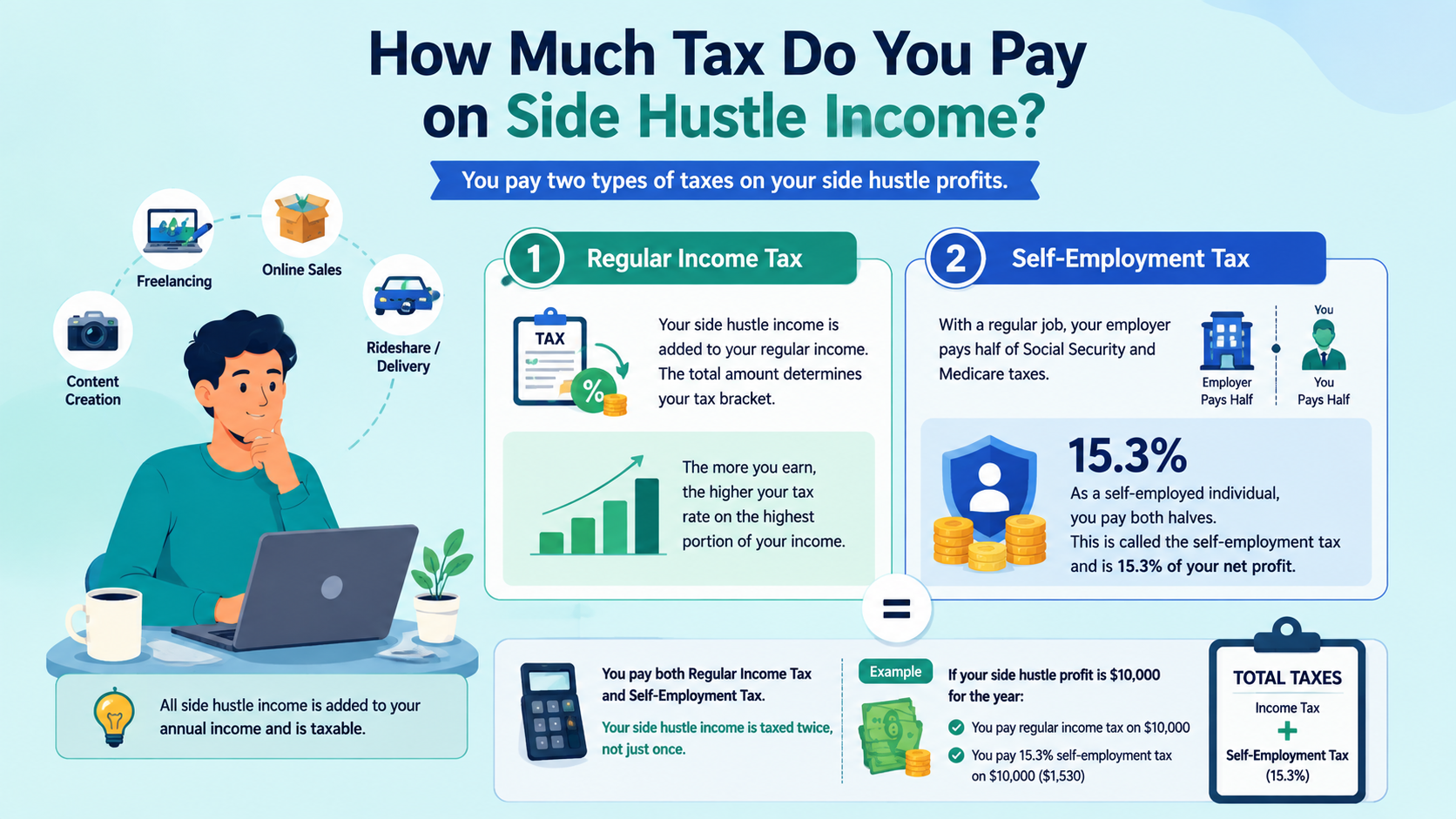
This is the one thing that a lot of inexperienced computer users do not expect. In the case of a regular job, the employer’s responsibility is to pay half of the Social Security and Medicare taxes, with the other half being paid by you. However, you have a side hustle and are in charge of yourself. This means that you must pay both halves of the costs.
This tax is known as the self-employment tax and is calculated at 15.3% of your net side hustle profit. This will be in addition to your income tax. Your side business income is taxed twice, instead of once.
If your side job makes a profit of $10,000 during the year, you will pay $10,000 of self-employment tax and regular income tax on the total amount earned in the year. This is an essential element of freelance taxes, as freelancers and side hustlers are self-employed and have the same tax rules.
Side hustle income is any money that you make from your side business and is considered taxable side hustle income. This includes:
Even bartering counts. The fair value of the property or services received as a payment form of equity is still taxable.
Third-party payment apps now are required to report earnings to the IRS when you reach certain thresholds. This is because it is not unusual for the IRS to be the first to know about the funds that are in your account before you file your tax returns. It is not a good idea to keep side income concealed. Can cause penalties, interest charges, and unnecessary stress.
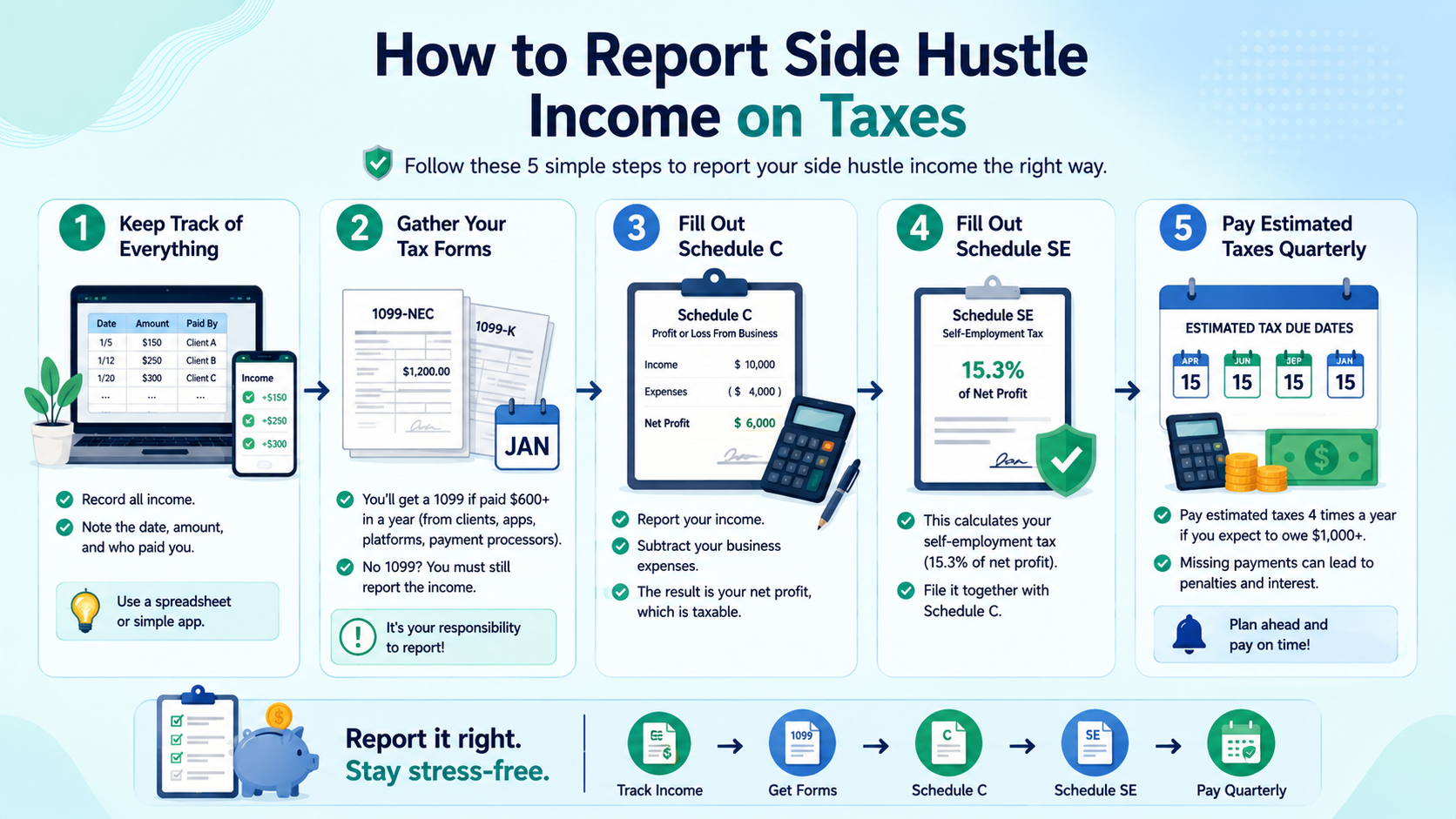
Let’s go over these steps that are involved in how to report side hustle income on taxes simply.
Record all your income for 2017. Use an Excel spreadsheet or a simple app. Record the date, the amount, and who paid you the money.
Clients or platforms typically will send a 1099 if they paid you $600 or more in a year. These forms are typically sent out by rideshare apps, freelance platforms like freelancer, and payment processors in January.
If you do not get a 1099, you are still required to report the income. This is a form that simply documents it. It is your responsibility to report!
This form shows your profit or loss of side business. You enter your income and then subtract your expenses from your business. Your net profit is what is left and is subject to tax.
This form is used to compute the above 15.3% self-employment taxes. It is to be used in conjunction with Schedule C.
This is a step that almost every beginner will fail! With a side hustle, there are no automatic tax deductions as with your normal salary. If you will be liable for $1,000 or more in taxes for the year, the IRS has four times a year that it expects you to pay estimated taxes.
Typically, due dates are in April, June, September, and January. If you do not pay these bills, you may incur penalty charges, regardless of when you pay your tax bill. Each of these is a piece of a very comprehensive beginner tax guide for earning beyond the regular job.
The good news is that side hustle tax deductions can lower how much you owe. A deduction would mean your taxable profit is lowered and hence reduced tax.
Common deductions include:
Save receipts and records for any amounts that you intend to claim a deduction for. If that occurs, the IRS may request proof and clean records will be of help to you. You are not going to want to overlook these tax deductions for side hustles. Do not overlook them, because they’re there to help you keep more of what you earn without confusing or fearing them.
Not all side hustles are created equal and the tax treatment is a bit different depending on how it is set up.
Knowing your specific type allows you to adhere to the appropriate side hustle income tax rules for your situation.
Here are some tips that can help to make it easy and stress-free:
These basic tax tips for the self-employed can help you save money and avoid painful problems down the road.
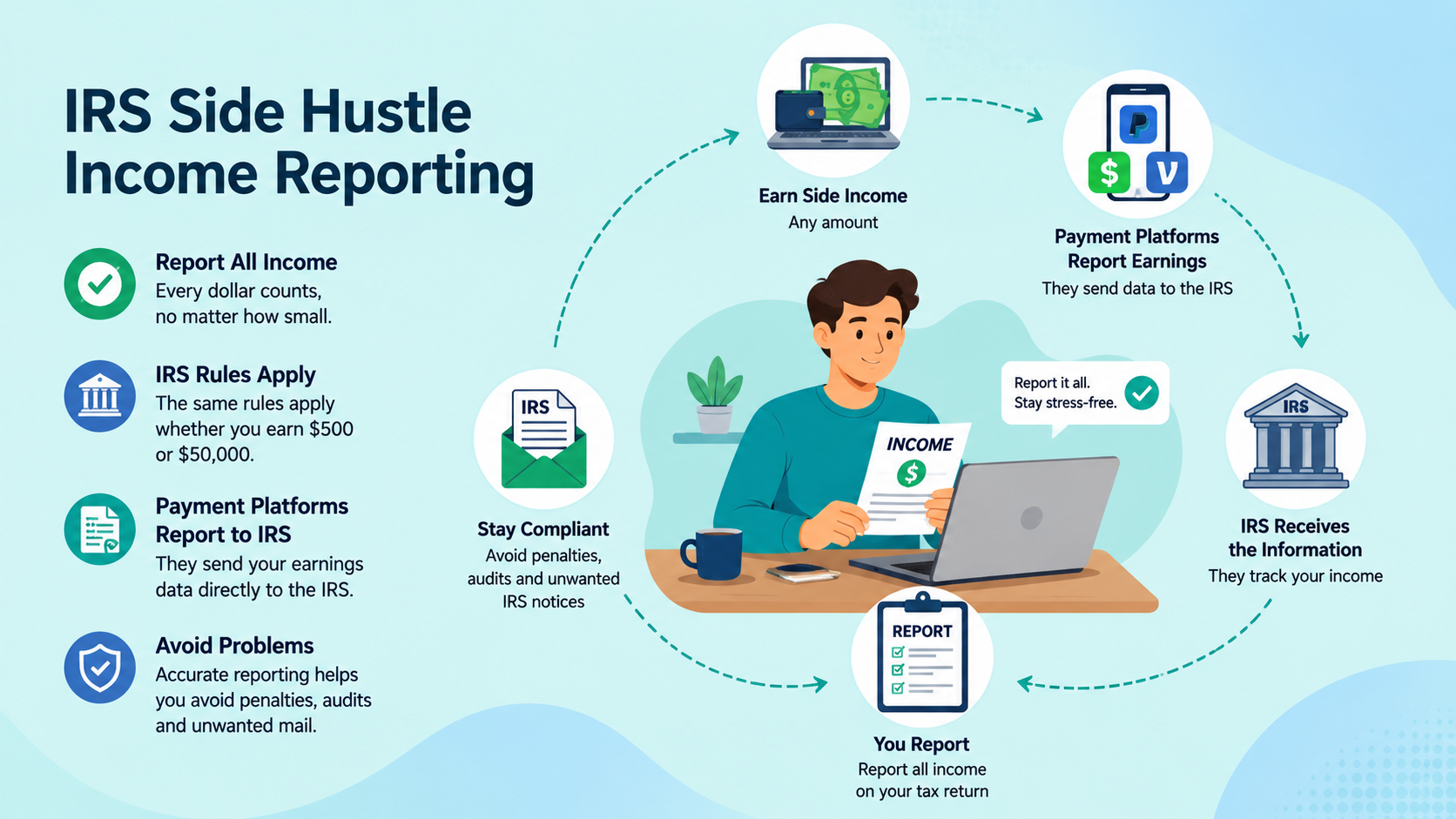
The IRS will be expecting you to report all income, regardless of how trivial it may be. IRS side hustle income reporting rules apply the same way whether you earn $500 or $50,000. Payment platforms now report earnings to the IRS and you do not have to worry about any penalties, audits, or unwanted mail from the IRS if you are not reporting the earnings properly.
There is a reason that side hustle business is an excellent way to take in some extra cash and there is a tax price to pay. Knowing what self-employment tax is, keeping records of your income, deducting the proper taxes and paying on time puts you on the right side of the law. Actuate your side business as a business from the get-go. Maintain good records, save money for taxes and file properly. It is an easy practice that can make this tax season a hassle-free one.
Yes. The minimum income amount to which side hustle income is not reportable is not specified.
The IRS may impose fines, penalties, and interest on your taxes and may even take legal action for underreported income!
Yes, however only the business usage part of your bill, not the entire usage.
Generally, if you anticipate owing $1,000 or more from the side business, then you will need to pay quarterly.
Yes. Subject to the regular income tax as well as an additional self-employment tax at 15.3%.
No. For tax reporting, a licence is not necessary. All types of income, whether or not there is a business registration, must be reported.
Most people will record their income and expenses on Schedule C and their self-employment tax on Schedule SE.