
Edited by
M. Ibrahim

Reviewd by
Abdul Qadir

Edited by
M. Ibrahim
Reviewd by
Abdul Qadir
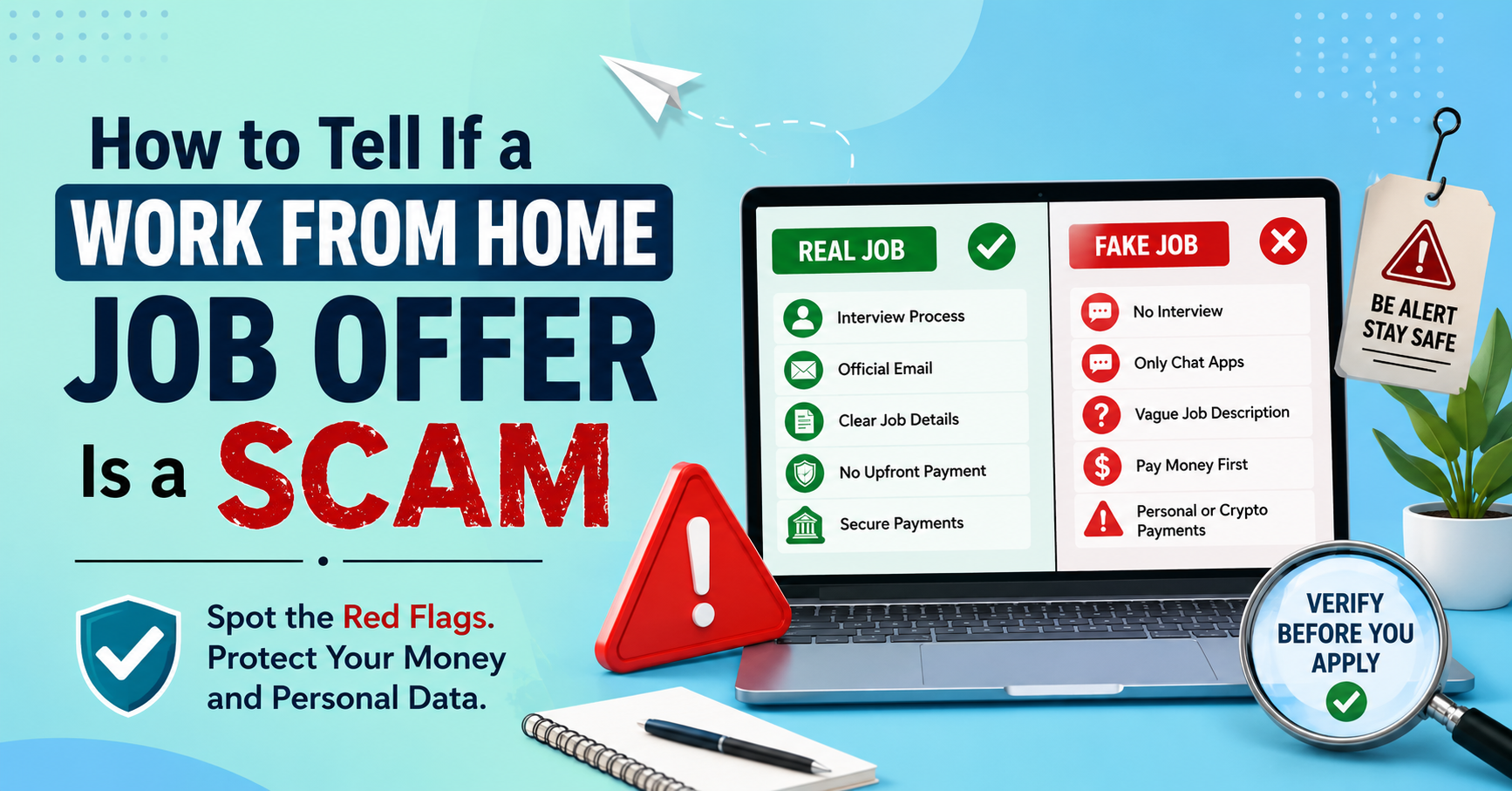
Such fake work-from-home jobs are widespread because remote jobs get a lot of applications. Scammers use them for identity theft and data theft, while some businesses put up “ghost jobs” to collect resumes or appear to be growing. If you’re searching for genuine work-from-home opportunities, it’s important to know how to separate real offers from scams before you apply.
There are warning signs to look for when looking for a work-at-home job scam: a demand for upfront payment for supplies, a guarantee of high pay for little work, or an interview that is held entirely on a text-based app such as WhatsApp or Telegram. Legitimate employers do not require a fee to hire you or to provide checks to purchase equipment.
It is a dream job to work from home. No commute, no office clothes, and a paycheck delivered right to your own couch. This is a dream that scammers know how to trap people in all day long. Fake work-from-home jobs cost people thousands of dollars every year; many victims do not receive their money back.
This article will discuss all the warning signs to avoid scams. By the time you are done here, you will know exactly how to spot work-from-home job scams before you part with a single rupee or dollar.
After 2020, remote work has been increasing at a rapid pace. Millions of people began searching for jobs that they can work from home by using their laptop. This was a bright opportunity for scammers. They create fake job posts, fake companies, and even fake HR teams and fool job seekers. A major reason these scams are effective is that they target those who are in need of cash. Those who are new to school, new mothers, retirees, and anyone who lost a job recently are targets. The only thing the scammer wants to do is to rob you of your money or your personal information and not a real job.
If you want to work in a real company, they will call you in for an interview. When a company contacts you immediately after submission of your resume or even before, it is a bad sign. If there is no interview, there is no background check, and there is no reference check, they are probably not interested in your background. They are only interested in something that they can obtain from you.
This is the largest indication of common work-from-home scams. A real employer will never require you to pay for training, equipment, software, or a “registration fee” before you begin to work. Do not accept any job that requires you to pay money before you work. It is a legitimate company that pays you. They do not request any payment from you.
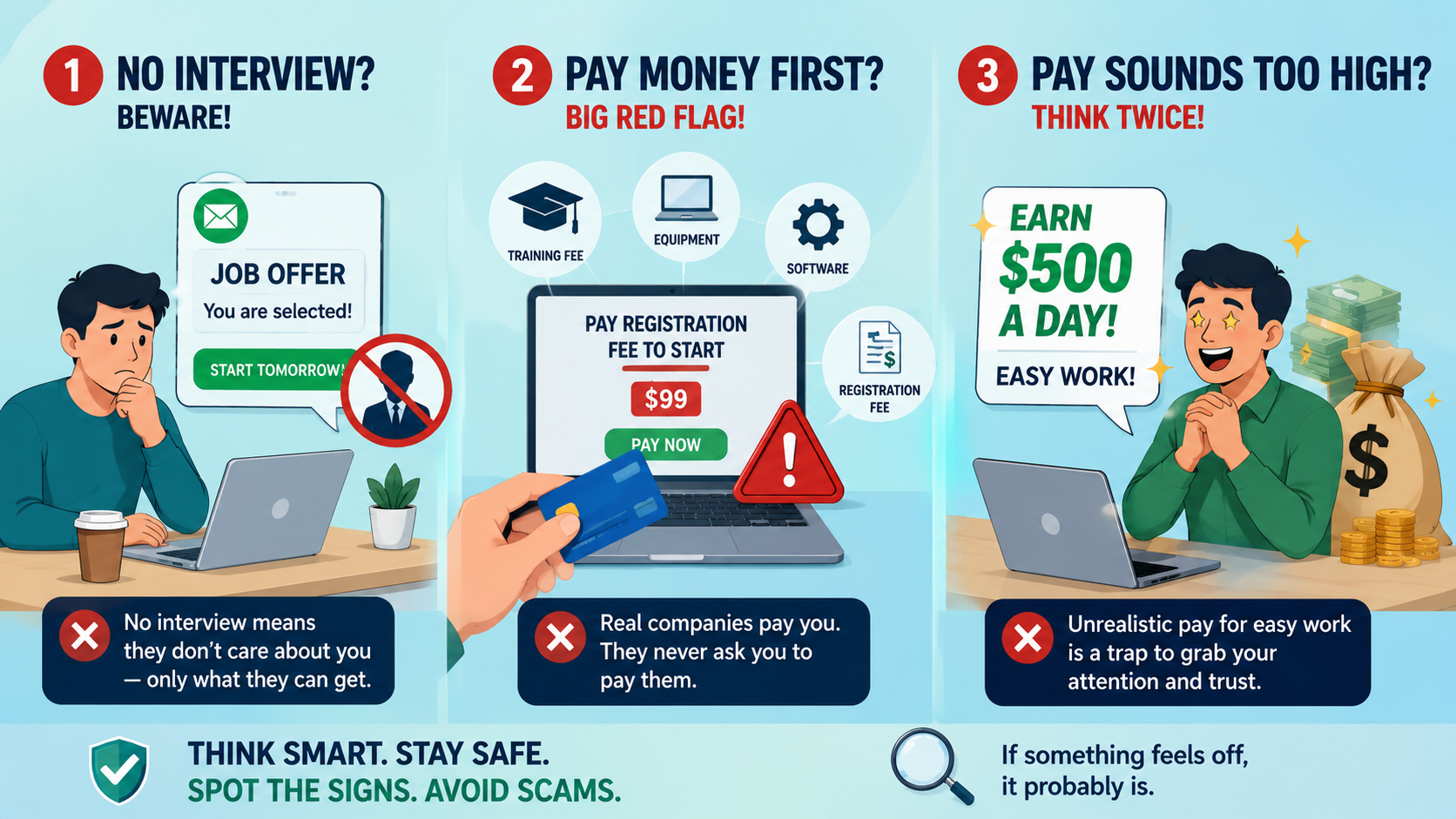
Be aware of any offers that say “Make $500 a day typing a few lines” or “Make $2000 a week doing easy data entry. These are not market rates, but just for simple things. Scammers like to use large numbers to immediately attract your attention because greed is a factor that can overcome logic.
There are lots of scammers who steer clear of email and phone calls. They like using WhatsApp, Telegram, or text messages, as they are more difficult to track. You can actually expect to connect with a real company via a suitable HR portal, video call, or official email address, not a random number that emails you at random times.
Do not take any offer until you have searched for the company name. If there is no official website, there is no LinkedIn page, there are no reviews or there is a really copy-pasted and unprofessional-looking website, you should stay away from it. Digital footprints are created over time, as real businesses are established. These fake ones come in one day and go away the next.
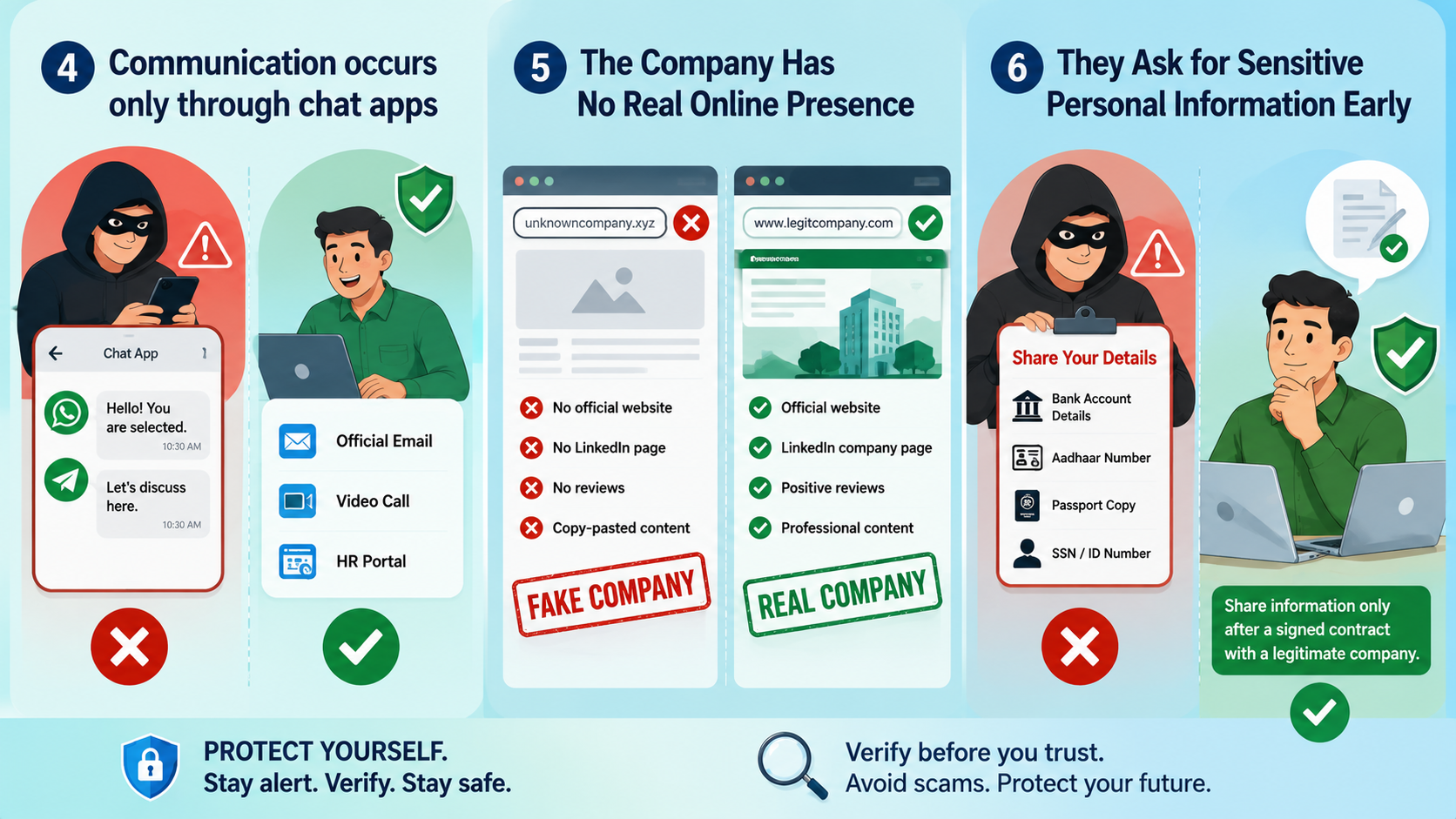
In a scam job, the representative will seek your bank account information, Aadhaar number, passport copy or Social Security number before even signing an official contract. This information is misused for identity theft/bank fraud. Only share such information when you have a signed agreement and are sure that the company is legitimate.
Quality businesses also edit their job ads and e-mails. Scam e-mail messages may be poorly written in English, use a lot of capitalization, and have unusual sentence structures. This is because many scam operations are located overseas, and they do not utilize any good translation tools.
The scammers push you into taking a quick decision. They do things such as “This offer expires in 2 hours” or “There are only 3 spots left. This pressure prevents you from being able to think clearly or fact-check. When you receive a genuine offer of employment, you will have time to contemplate the offer, ask questions and even negotiate.
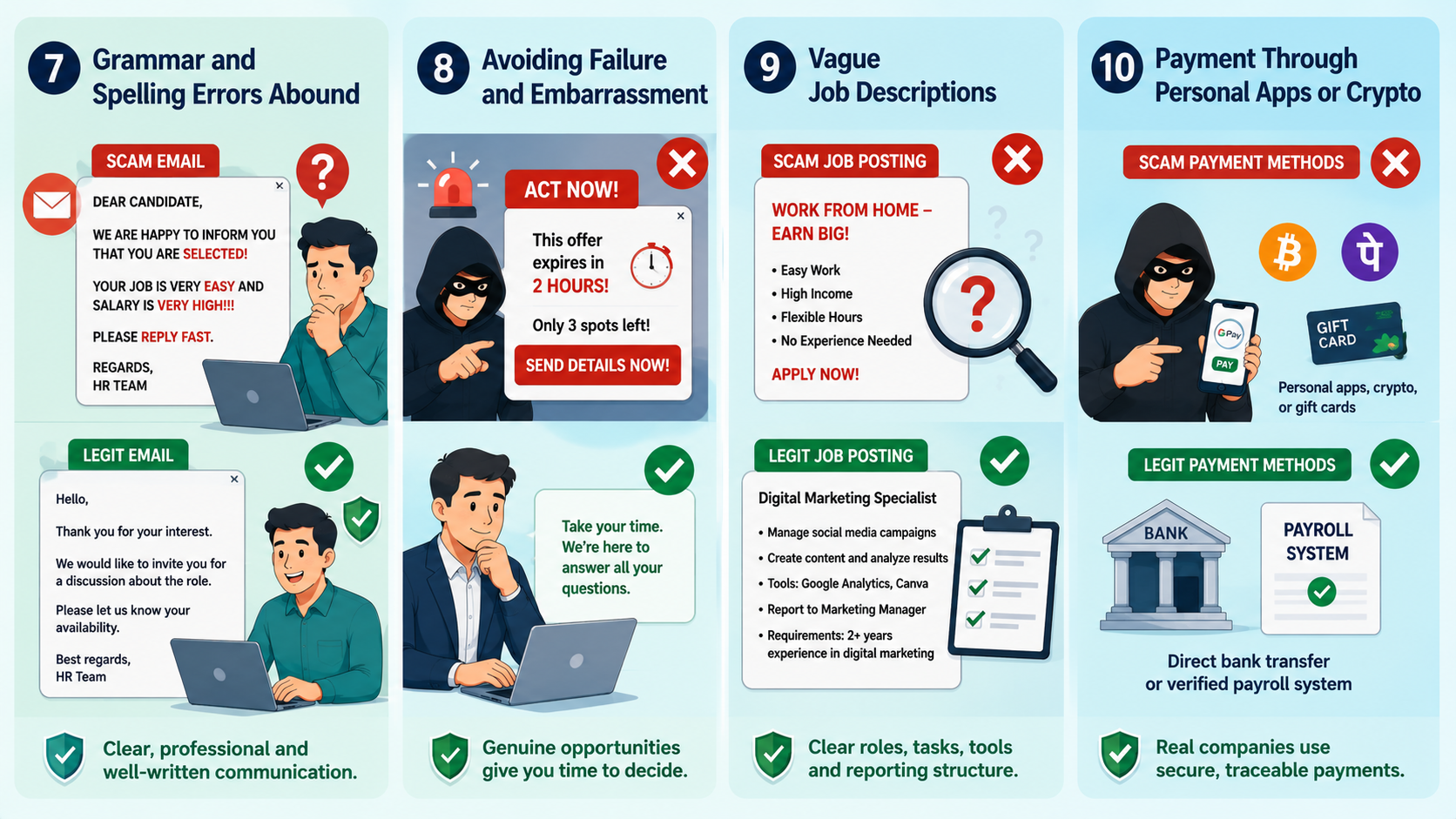
When the job title is fancy, but the job description is not, you need to be careful. Job postings for scams typically lack information about what tasks the job entails, the tools that will be employed, and the reporting structure.
Payroll is made possible by proper bank transfers or verified payroll systems in legitimate companies. Paying you via personal payment apps, gift cards, or cryptocurrency is another big red flag of a scam.
| Feature | Legitimate Remote Job | Fake Remote Job |
|---|---|---|
| Interview Process | Involves video calls, phone interviews, and multiple steps. | Conducted entirely via text chat or automated forms. |
| Equipment Costs | Provided directly by the company or reimbursed through payroll. | Requires money transfers or check deposits to buy from “approved vendors.” |
| Communication | Official business email domain matching the company website. | Free webmail accounts (@gmail.com) or messaging apps. |
| Job Description | Clear role expectations, required skills, and clear deliverables. | Vague descriptions, no requirements, and promises of high instant earnings. |
| Personal Information | Tax documents (W-4/I-9) requested after formal hiring. | Direct deposit details and identification requested during initial contact. |
Real cases are an excellent way of identifying patterns. Here are some typical examples of work-from-home scams that can be found on the web:
Once you learn how to identify the signs, you will also know how to avoid work-from-home job scams step by step:
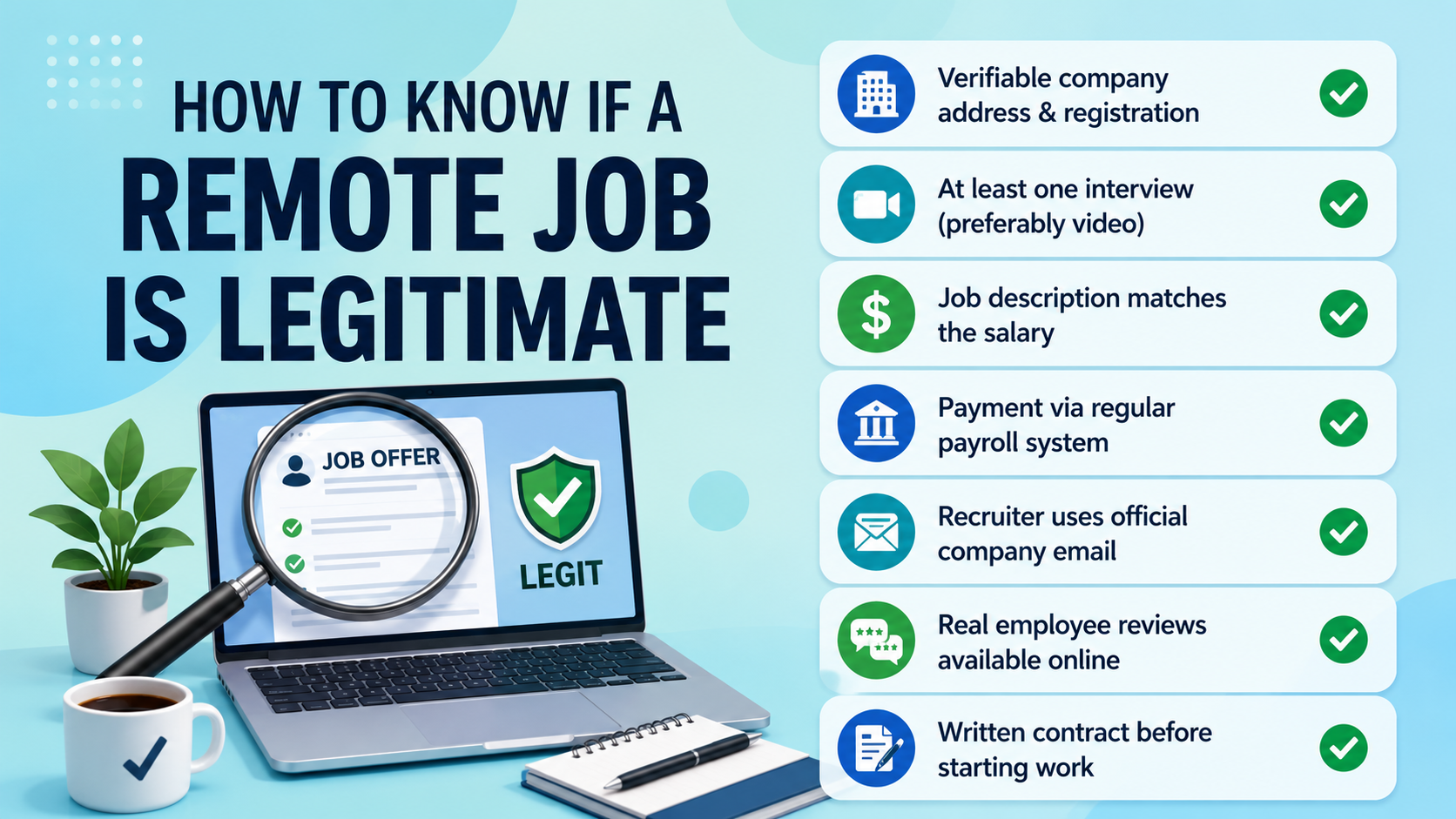
A simple checklist to follow for how to know if a remote job is legitimate is as follows:
If a job has many of these attributes, chances are it is legit. If it does not work at the second point, take a step back and delve into the issue further before proceeding.
Fake work-from-home jobs take advantage of hope and urgency. Simple awareness is key to the best defense. Take your time, look into the company, and do not pay money for the job. A true employer will pay you for your work, not him/her for you. The next time a new job opportunity comes into your inbox or chat app, you have this list to assist you. You will avoid months of financial and emotional difficulty by spending a few minutes to get some information.
Avoid deals that require payment up-front and do not involve an interview, have ambiguous job descriptions, and communicate only through chat apps rather than official email.
No. Employers do not require you to pay for training, software, or registration. Any payment request is a huge red flag.
Call your bank right away; if necessary, cancel your card, update your password, and keep an eye out for unauthorized transactions on your account.
This type of post has a high percentage of false posts, but not all of them. Be sure to check out the business before giving them any data entry information.
Report to the job posting site you used and your national consumer protection agency, and warn others in job posting reviews on sites such as Glassdoor or Indeed.
Yes. Scammers are increasingly seeking personal documents such as ID proof and banking information, which they use to steal someone’s identity or commit financial fraud.
The resume is usually considered a low risk, as is anything that contains your bank account number or ID numbers, but only include them when you are sure that the company is legit.