
Edited by
M. Ibrahim

Reviewd by
Abdul Qadir

Edited by
M. Ibrahim
Reviewd by
Abdul Qadir

It may seem harder to find your first freelance client than it does to find freelance work once you’re experienced. You might have some valuable skills but not be able to get people to hire you because they don’t trust you.
When you’re learning how to get your first freelance client, concentrate on three components: one single service to offer, samples of useful work you do and people who actually need your service. One way to begin is through freelance platforms such as LinkedIn, networking, direct outreach, local businesses and small agencies.
It’s not a requirement that you have years of experience or a substantial portfolio. There is a minimum amount of proof required to begin a discussion.
There are some preliminary items to get ready before reaching out to clients. A simple portfolio will do if you are not creating a complex website and taking weeks to do so.
You need:
Your aim is to be prepared for outreach, not to build your ideal freelance business before getting in touch with anyone else. Incomrise provides you with practical information about freelancing, side hustles, online income and digital work if you’re looking to build freelance income.
A focused approach makes the process easier. Start with these steps.
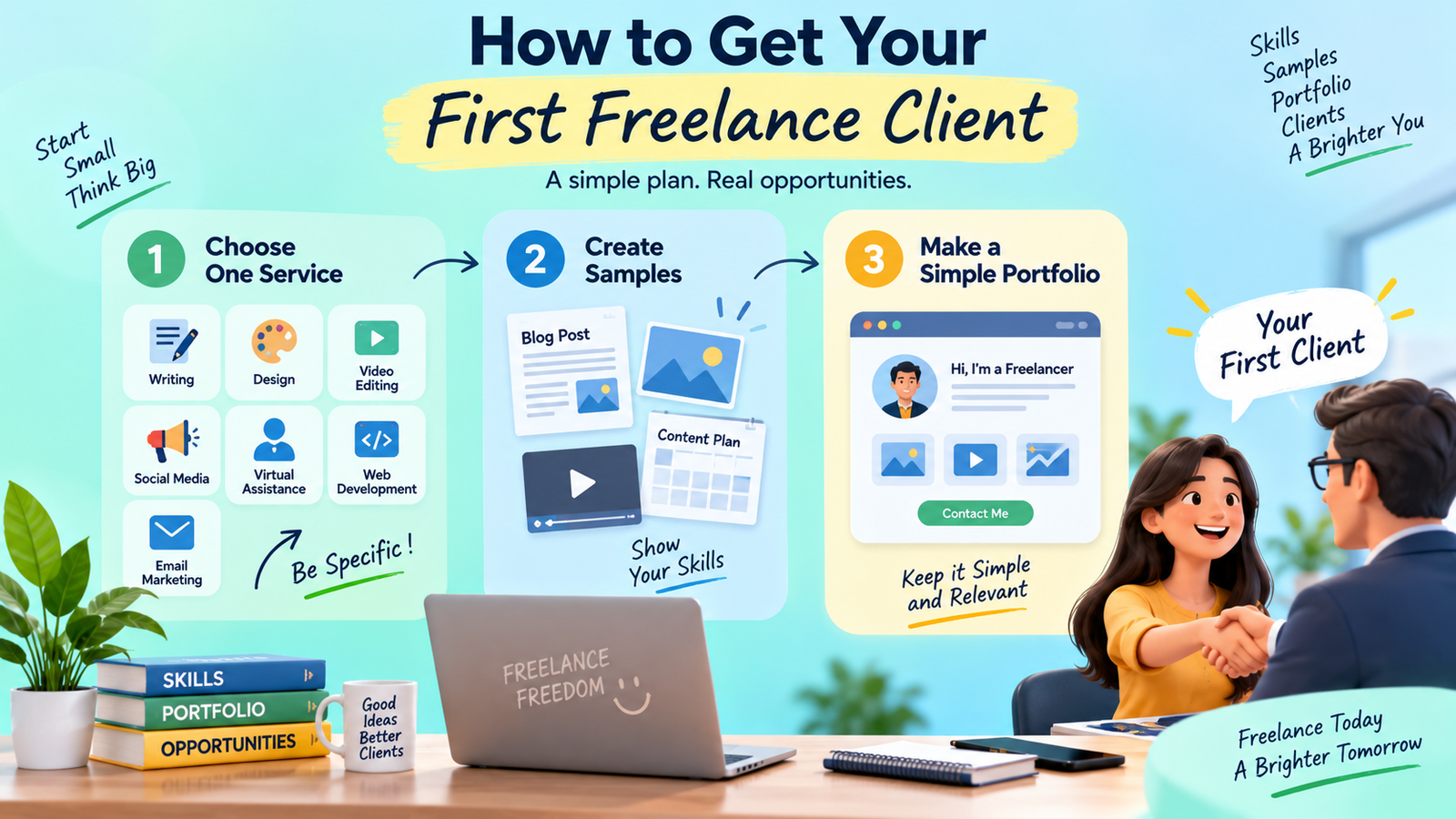
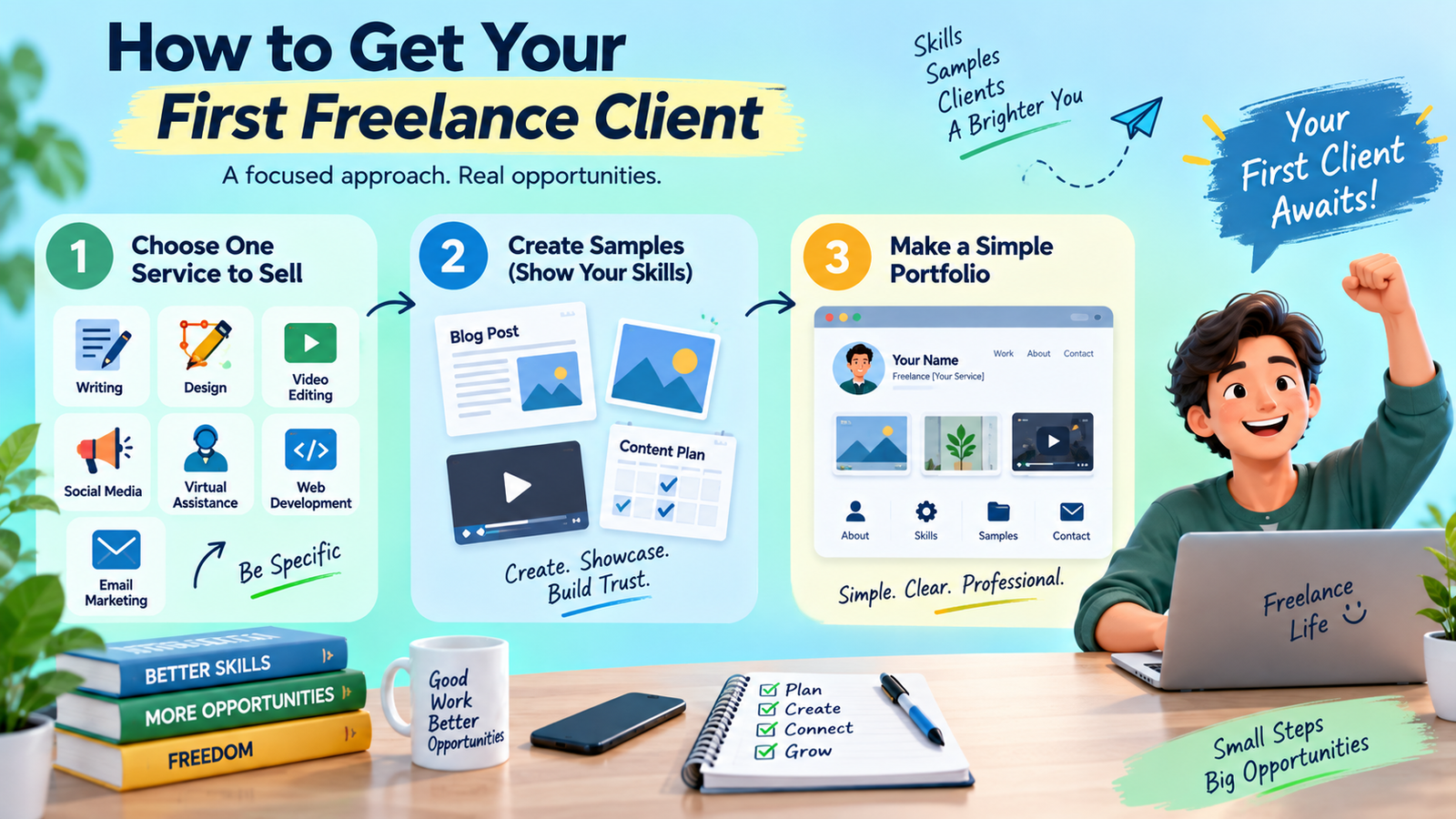
New users tend to have overly general profiles. It’s hard for your clients to tell which of your main skills is writing, as well as design, marketing, websites, social media.
Select one service and be specific!
Examples include:
A specific service also helps you generate relevant samples and locate an appropriate client.
Skills can be shown before getting your first paying job. A writer can make two example blog posts for a particular industry. One could design a graphic for a fictional business for social media. An individual developer can create a small website. A social media manager is able to create a sample weekly content calendar.
Be sure to explain to the students that these are their own samples. Do not present practice assignments or exercises as paid assignments or exercises. Samples should demonstrate the type of work that you are looking to sell. A random sample of projects isn’t as helpful as 3 projects that are relevant to your target clients.
Simple is good for beginner portfolio design. Add a brief introduction, your service, pertinent samples, abilities and contact details. You can create a simple portfolio webpage or even a well-organized document when starting.
The following are the basic questions that your portfolio should address:
What do you offer? What can you do? How can the client contact you?
Remember to stick to the points and not use too many words about yourself.
If you want a step-by-step approach, see our guide on how to create a freelance portfolio for more tips on organizing your samples and presenting your skills.
There are a number of different locations where you can find your first opportunity. No platform is guaranteed for clients; use the channels that best suit your service and target audience.
Upwork: Look for jobs that are similar to the skills you have. Do not apply for all the jobs that are available. Select projects that have a relevance for your experience and samples.
Fiverr: Avoid listing services that have nothing to do with the specific service you offer. The title, description, sample(s) and profile should be clearly defined as to what you offer.
LinkedIn: Meet business owners, marketing managers, founders and more in your desired industry. Post helpful projects and search for relevant freelance projects.
Facebook groups: Find groups that are part of your niche or your target clientele. Before advertising, abide by each group’s rules.
Personal network: Share your service with former classmates, coworkers, friends and professional contacts. There’s a possibility that someone in your network has a need for help.
Cold email / direct messages: Identify businesses that seem like they’re looking for your services and send them a brief, customized message.
Small companies and agencies: They might hire out certain jobs to others, known as a local business or agency. Do some research and describe your service in terms of what it can do to solve a problem with relevance.
Job boards: Look for freelance, contract, part-time and project-based jobs.
Knowing where to find your first freelance client is useful, but choosing the right prospects matters more than joining every platform.
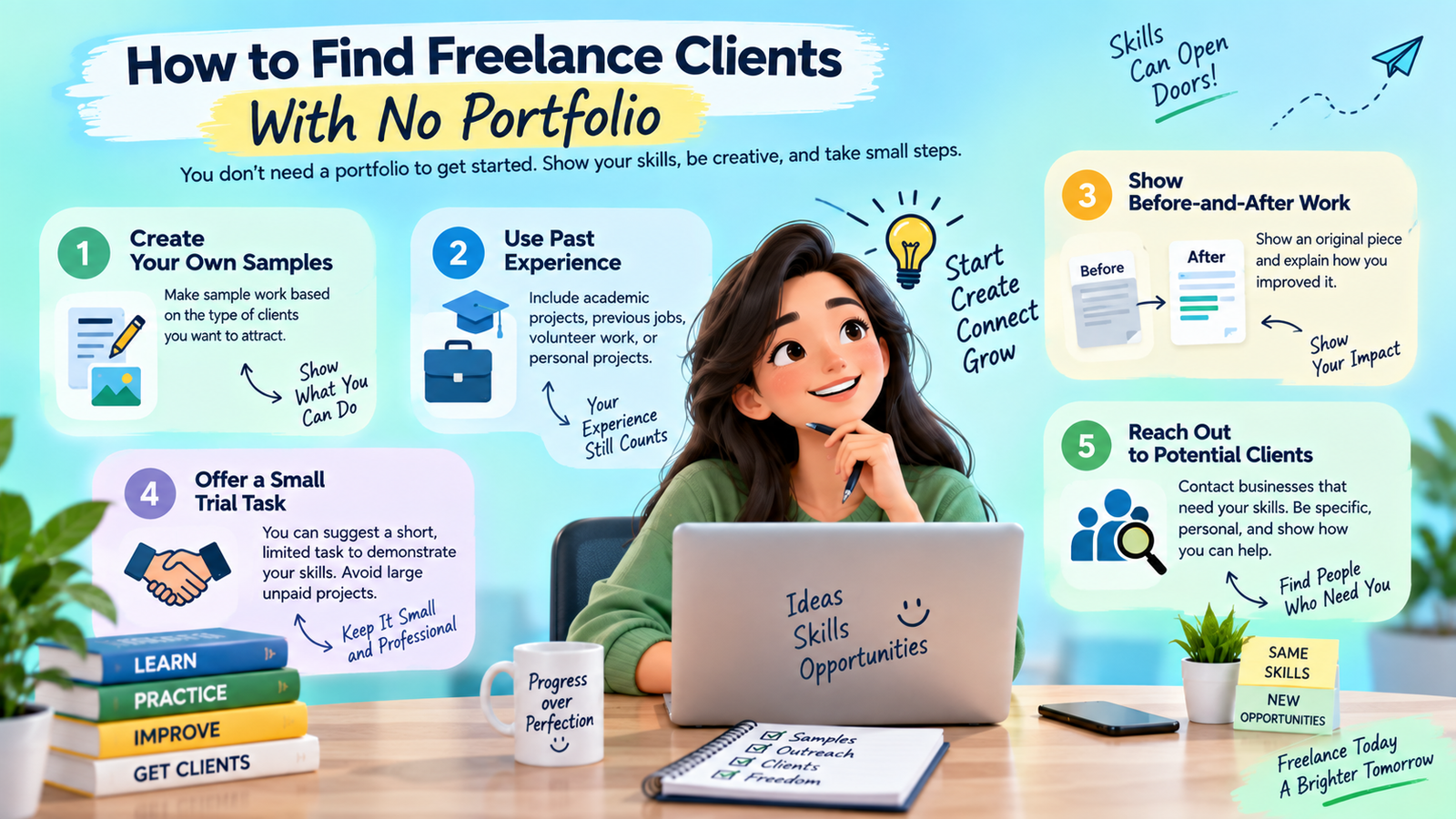
Develop models of self-designed examples according to the nature of the work. For instance, if your goal is restaurant marketing, you can write sample posts for Instagram and if you’re a new writer, write articles for a certain niche business.
Previous Employment, Volunteer Work or Personal Projects may be used if relevant to the Academic Project. Experiences may be used to illustrate research, writing, communication, organization, design, or technical skills.
Another great feature is the before-and-after examples. Demonstrate and describe an original piece and its improvement. You may also provide a mini task if suitable. Focus the task. Don’t do big unpaid projects only to show off your capabilities.
A good pitch is not a long introduction about you, but rather on your client’s project.
Always be specific about the client’s business/business position or job posting. Demonstrate understanding of the task and use one skill or sample, communicate what you can do to support and conclude with a simple next step.
For example:
Hi Sarah, I do see you’re writing more for small business. I create clear, well-researched blog posts and I created a sample blog post on a related topic. I can assist you in creating effective articles that resonate with your audience and tone of voice. Would you like me to send the sample?
Stay on the point. A client will often receive numerous emails, therefore a relevant and easy to read proposal will be more likely to be opened than a lengthy introduction.
Having one client is not enough to create a regular system of finding clients.
Make a weekly schedule that contains:
If you are learning how to consistently generate freelance leads, focus on quality rather than sending hundreds of messages.
Ensure a simple spreadsheet of contact person’s name, company, date contacted, services discussed, response and follow up date. This will enable you to monitor your outreach and determine what works and what doesn’t to create conversations.
When you isolate freelance experience from useful experience, it makes it easier to learn how to get your first freelance client with no experience. You may already know some skills from school, university, work, volunteering or a project you have taken on.
For instance, if you are in an academic course, a research project can show research and writing skills. Organisation and communication are demonstrated in a previous office setting. Having a personal website that shows web development skills.
Refer to these experiences as evidence, but honestly describe them. It doesn’t need to be an act of an expert! Demonstrate an understanding of the work and produce a useful product.
It’s good for you to start if you’ve not done so before, our guide on how to start freelancing with no experience provides some explanation on how to develop your abilities, select a service and begin searching opportunities.
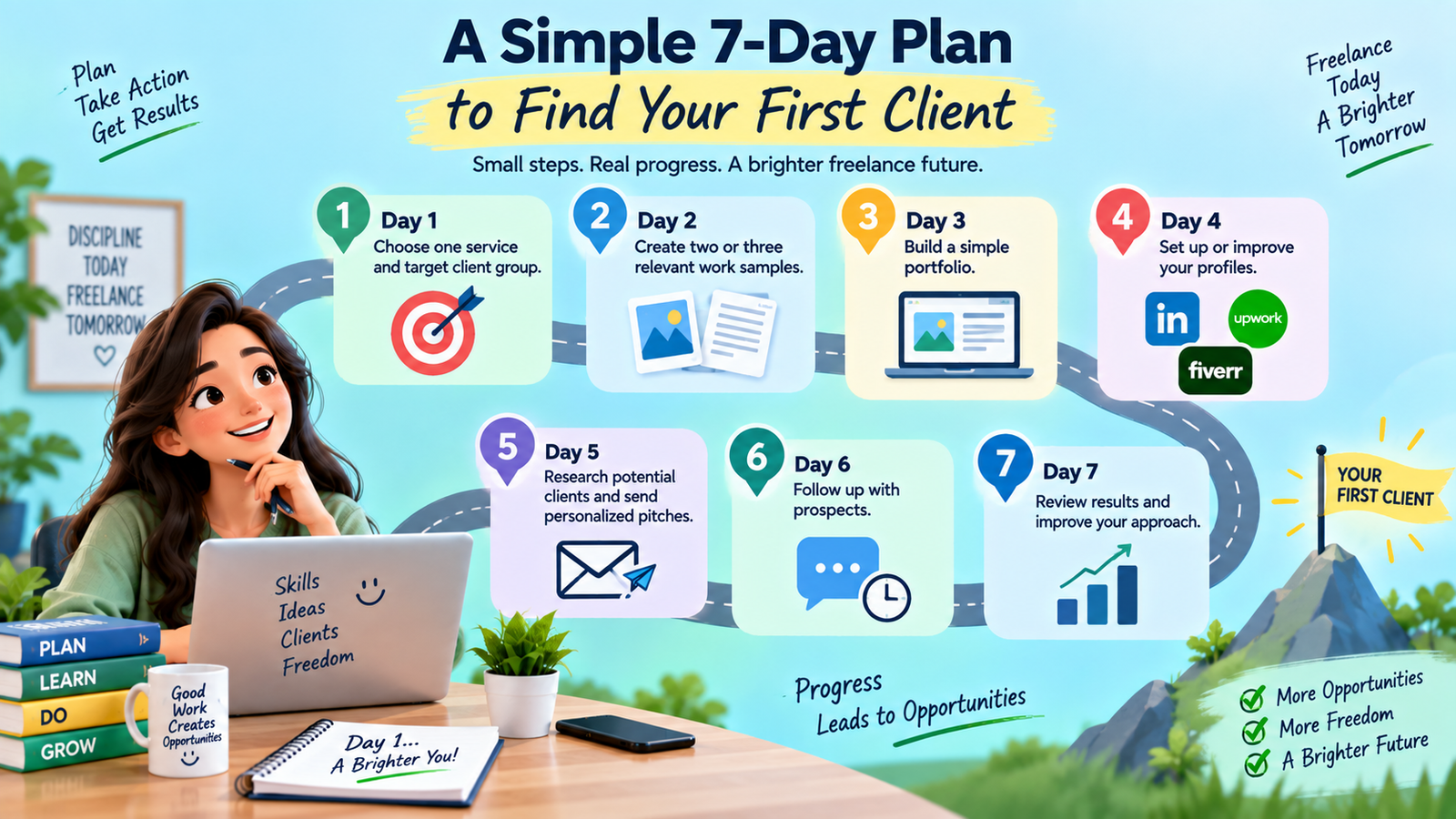
Follow this plan to plan your first week. Not guaranteed to provide a client within 7 days. It provides you with a down to earth approach process.
Day 1: Select a service and a target client group.
Day 2: Generate 2-3 appropriate work samples.
Day 3: Create a basic portfolio site of your service, samples, skills and contact details.
Day 4: Make or enhance profiles on related freelance websites and job boards.
Day 5: Find clients to pitch to and tailor the pitch message.
Day 6: Follow-up with pertinent prospects and keep target outreach efforts going.
Day 7: Check your results and discuss with your partner. Determine if messages were responded to and refine pitch and samples.
Do it again and make adjustments as per actual feedback.
You don’t need to have a flawless website, years of experience, or dozens of testimonials to acquire your first freelance client. It begins with a strong service, helpful samples and persistent outreach.
When you’re still asking the question how to get your first freelance client, you should stop trying to please everyone. Pick a service, find targeted clients, present examples of your work and send well-thought out pitches.
Some prospects will refuse, others may not respond. Take those conclusions and make them better in your samples, proposal and targeting. Its aim isn’t just to get one project. The goal should be to create a repeatable procedure that will make it easier to find the next client.
Use Upwork, Fiverr, LinkedIn, job boards, fan groups on Facebook, personal contacts, local businesses, agencies and direct outreach. Select the channels that your target audience is on.
Yes. Demonstrate what you can do through your transferable skills, academic projects, personal work, volunteer activities and self-created samples.
Yes. Develop 2–3 samples that will clearly exemplify the service you want to sell. Your first portfolio can be as simple as a document or a webpage.
There isn’t a definite quantity. You should begin with a manageable number of prospects that are relevant and on a more individual level instead of mass outreach.