
Edited by
M. Ibrahim

Reviewd by
Abdul Qadir

Edited by
M. Ibrahim
Reviewd by
Abdul Qadir
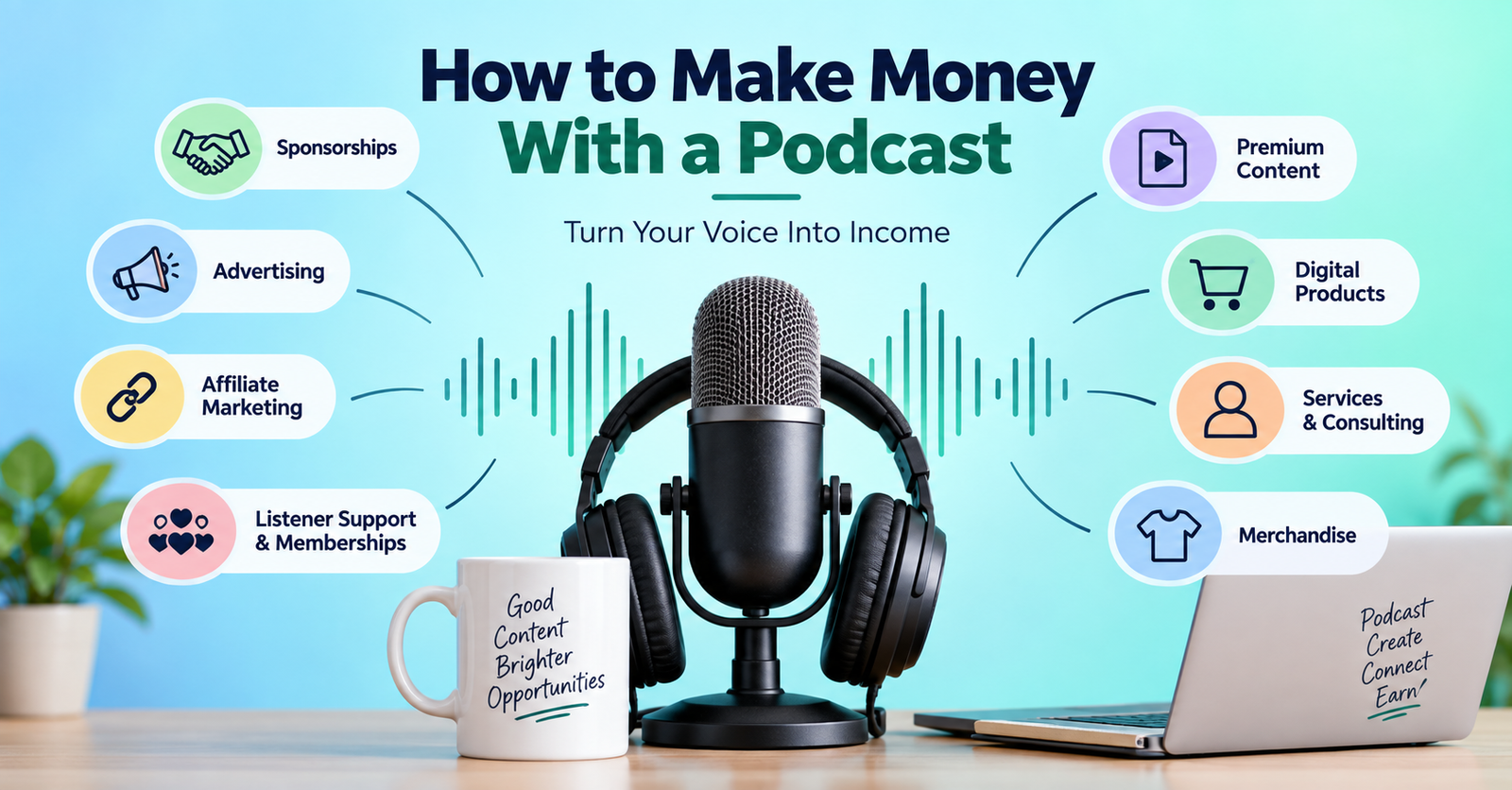
There are lots of options beyond ads to make money from a podcast, so if you’re wondering How to Make Money With a Podcast, you won’t be asked for ads alone. Podcasters monetize their shows via sponsorships, advertising, affiliate marketing, listener support, memberships, premium content, digital products, services and merchandise. Some of them also process their podcasts into videos on YouTube and monetize them using YouTube’s features.
While there is a connection, the size of the audience is just one factor. A small podcast that can serve as a strong audience can appeal to appropriate sponsors, market valuable products, or generate parlour service leads. Other factors that also have an impact on podcast income include niche, trust, engagement, location and the offer itself.
Podcasts have monetisation strategies that involve engagement with a product, service, advertiser or paid experience. Some of the common sources of revenue are:
A creator doesn’t have to utilize all of the choices. There are a lot of podcasts that start on one income stream and then gain a second one as they get to know their audience. Incomrise provides practical information and resources for freelancing, side hustles, online income and digital work if you are looking to build freelance income.
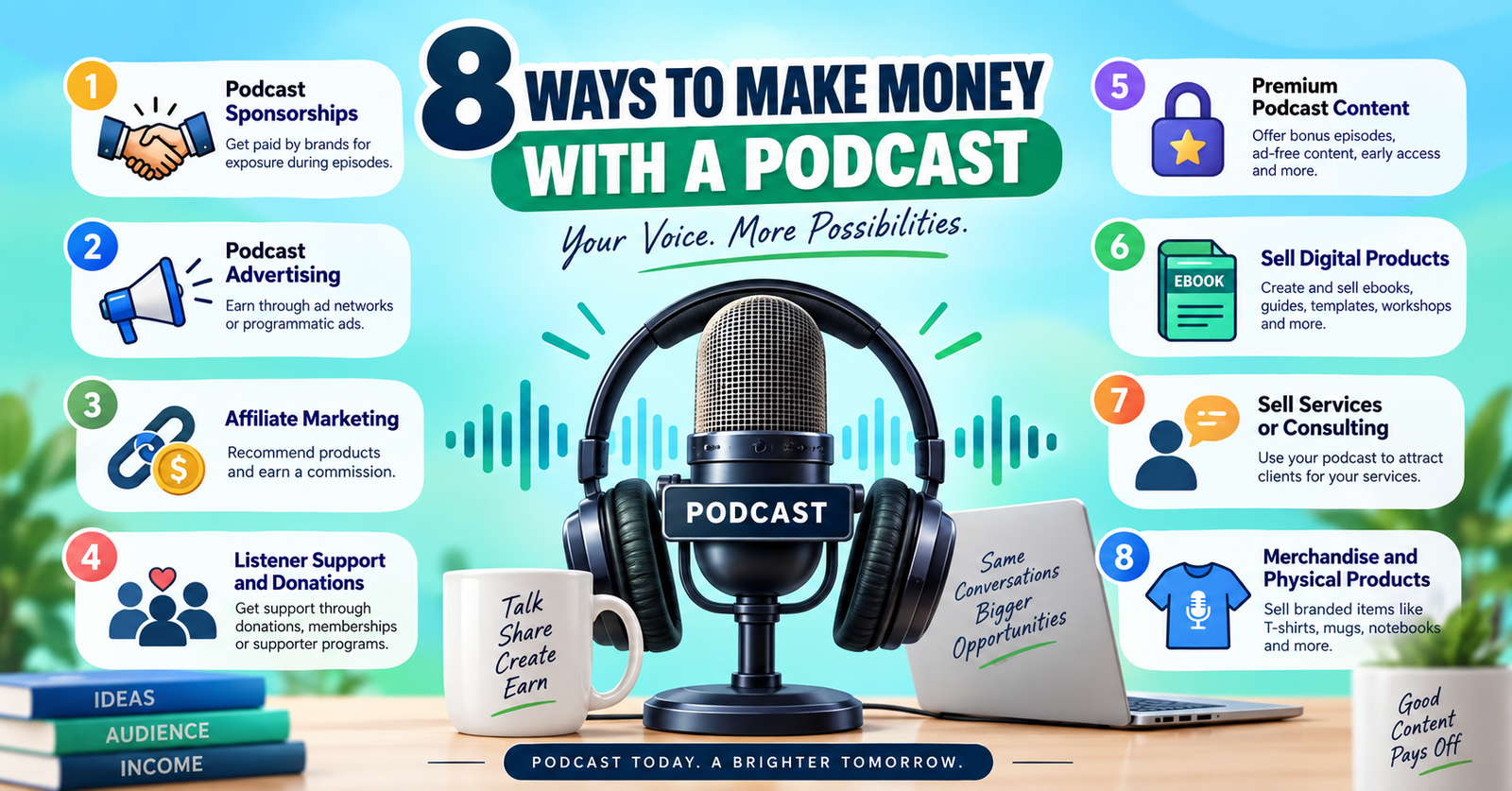
Sponsorships are fees paid to a podcast to get their product or service promoted on the show. The host may read an advertisement before, during or at the conclusion of the episode.
Host-read ads may be integrated into a conversational program since the product’s introduction is done by the host. Other elements that advertisers consider include audience relevance, engagement, content quality and the podcast’s topic.
Don’t take it for granted that all podcasts are sponsored at the same rate. The price depends on the advertising agreement, the target audience, the niche, the needs of the campaign and other factors.
Podcast advertising can also be indirectly delivered by an ad network or programmatic system instead of having a direct relationship between the podcast host and the ad network.
A direct sponsorship is a specific type of sponsorship where the podcaster collaborates with a brand and outlines the terms of the sponsorship. An advertising network can link up podcasts to advertisers and also take care of a portion of the process. Programmatic advertising is the use of technology to deliver ads based on the data and inventory that is available.
These models can vary, so it’s important for creators to examine the policies of the platform or network that they use.
Affiliate marketing gives podcasters another way to earn from product recommendations. A creator shares a special link or code and if the affiliate program has criteria for qualifying action, then the affiliate program pays a commission for that action.
Relevance matters. Suggestions must be episode-appropriate and be of value. It’s also crucial to disclose anything that has a financial connection to the creator and a brand. The FTC recommends that endorsers mention any direct or indirect connections they have with a brand and to make them easy to see.
Some podcasts have a direct monetary return from their listeners. This can be donations, paid memberships, private communities or supporter programs.
This can be effective in the case of podcasts with a loyal following. It’s okay for a listener to not find the show through an ad to benefit it. They can pay since they value the material and desire the podcast to continue.
The creator may provide a benefit for supporters like bonus content, access to the community, or early releases. It is dependent on the audience and membership platform what the benefits are.
Free episodes can help win over new listeners while premium content will help to keep longtime listeners engaged.
Premium options include:
In some areas, for instance, Spotify has podcast subscriptions. The current creator documentation says that it is available depending on aspects like location, audience size and hosting platform.
A premium model is best suited when the premium content that’s offered to listeners is something of value to them and not just a simple pay-walled version of ordinary content.
A podcast can also help to sell digital products that relate to the topic. This can be an ebook, guide, templates, checklist, workshop and more. The podcast provides an opportunity for the creator to share expertise, offer answers and present informative concepts.
The product must have an obvious link with the target audience and their interests. The edit of presets, photography guides or educational workshops is natural for a photography podcast. A product that is random is not as closely related.
The podcast is a great opportunity for professionals to use as a service-building tool of trust. Consultants, coaches, writers, designers, marketers and business professionals can talk about issues of their target customers. For instance, a creator may generate a podcast to reveal his or her competence and draw in leads to his/her freelance writing services.
The podcast creator doesn’t get paid for the services. Rather, it’s a way to bring the inventor’s knowledge to prospective clients.
Merchandise gives podcast audiences another way to support a show. Common examples include T-shirts, mugs, notebooks, stickers and niche-specific products.
This model generally makes more sense when a podcast has an identifiable community or brand. A comedy show, sports podcast, or fan-focused program can have merchandise connected to its themes, phrases, or identity.
Creators also need to consider production, inventory, shipping, customer service and other operating costs. Revenue from merchandise is not the same as profit.
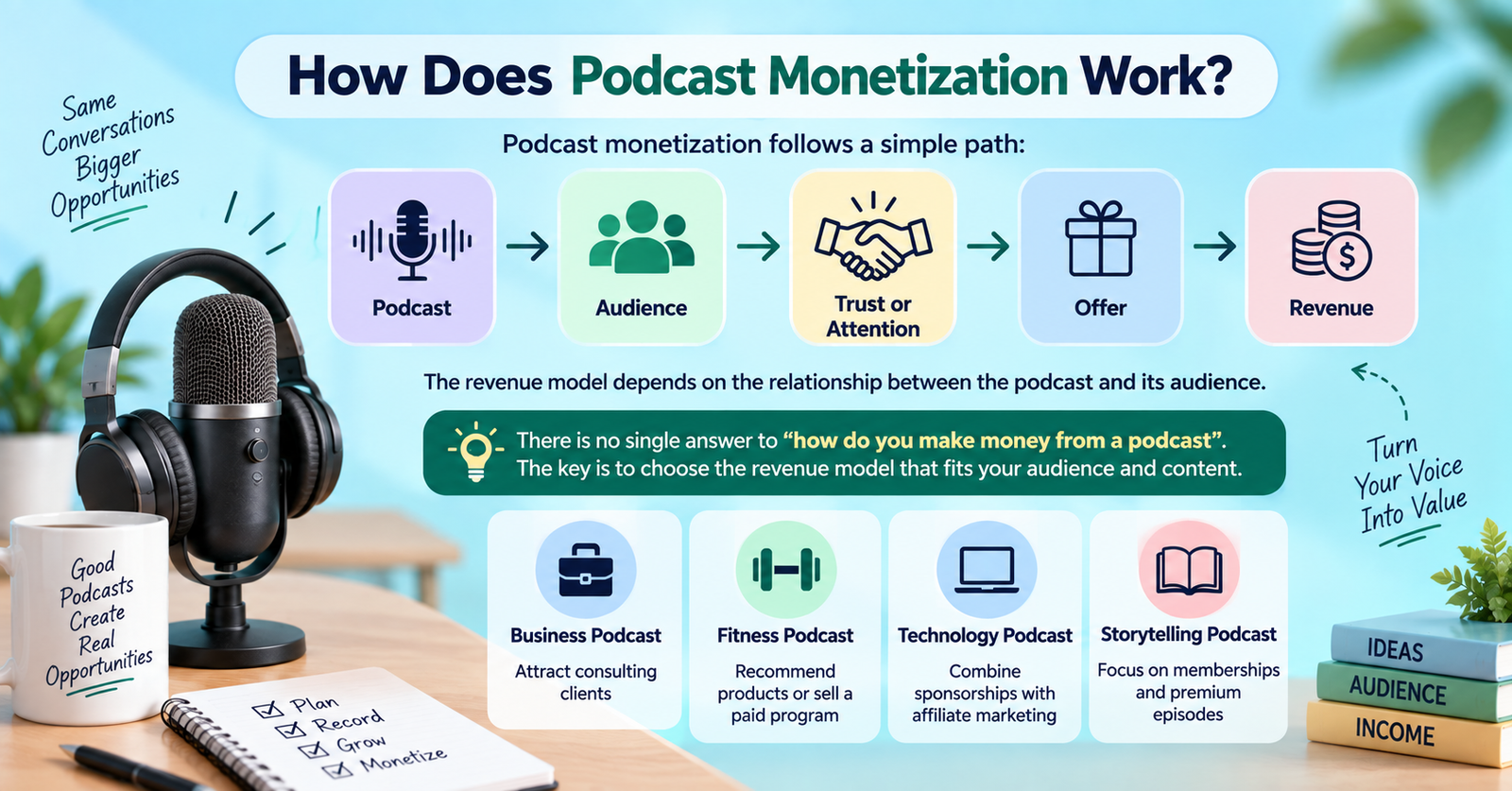
Podcast monetization follows a simple path:
Podcast → Audience → Trust or Attention → Offer → Revenue
There are different revenue models for podcasts, depending on the connection between the podcast and its audience.
Consulting clients may be interested in a company podcast. A fitness podcast could feature products that are relevant and/or sell a paid fitness program. Sponsorships and affiliate marketing may be integrated into a techno-podcast. One of the things a storytelling podcast could be about is premium episodes and memberships.
Hence, the reason why the answer to how do you make money from a podcast doesn’t have a single answer. The question to ask is which does the audience and content.
The earning potential for podcasts is extremely variable. While the number of listeners is important, it is not a measure of revenue.
Important factors include:
A podcast with a professional audience might command a higher commercial value than a podcast with a wider audience of more casual listeners.
Revenue is also not profit. A creator can make money through sponsorships or selling their products, and can also cover hosting, equipment, editing, production, advertising, software and more.
The payment will be based on the revenue source. A sponsor may bill directly on the terms of the campaign. Payments are made via the ad platform’s payment system. Commissions in affiliate programs are according to the rules of the program. Subscribers pay through membership platforms and product and service sales typically run through a creator’s payment system.
Availability and payment conditions also differ from place to place. For example, Spotify’s latest documentation specifies options for monetization and eligibility requirements in each market.
Not all podcasts are created equal and there is no one-size-fits-all approach for every type of podcast. The starting point is a practical one, which depends on the niche of the show, the audience, the skills and the size of the show.
A small podcast can discuss affiliate products, listener support, digital products or services. Sponsorships and ads can be more abundant on a bigger, established audience. Begin with one revenue stream that makes sense with the content. Note how listeners react to each addition and then add another.
Having a clear niche helps you become more aware of your audience and possible offers. A podcast on work from home isn’t the same as a local history podcast and so it has different monetization opportunities.
Provide listeners with motivation to revisit. Provide solutions, answer questions, share knowledge, tell helpful stories or offer fun discussions.
Be Regular and Easy to Find. The podcast can be found on social media, can get guest appearances, has episode topics that can be searched for and provides helpful show notes.
Choose one of the methods that suits the audience. There are so many options for a business podcast, which can cover topics like consulting, or you can go product-driven and discuss affiliate marketing programs.
Track metrics like listeners, downloads, clicks, affiliate conversions, inquiries, sales and membership signups. These numbers reflect which aspects of the monetisation plan are actually working.
After one method is used by the audience, present a similar method. Once a podcast is successful with affiliate sales, the next step is to discuss sponsorships or premium content.
There are a variety of ways to make money with a podcast, ranging from sponsorship, advertising, affiliate marketing, premium episodes, memberships, products, services, and merchandise. The key is to identify the audience’s priorities and find an appropriate revenue strategy that aligns with their interests.
So, if you’re still wondering how do you make money from a podcast, begin small. Create valuable content, know your audience, select one stream of income and measure the outcome. Podcast income doesn’t always start after the first couple of episodes, but it can grow when your relationship with your viewers grows.
Podcasts make money from sponsorships, ads, affiliate links, listener donations, memberships, paying for premium content, products, merch and services. The most suitable is determined by the context of the show and the business model.
There are no set limits. Blogging income relies on the audience size, niche, engagement rate, advertising demand, conversion rate, products or services, expenses, and variety of income sources.
Yes. A small podcast can look into affiliate marketing, listener support, digital products or services that fit its niche. A large audience isn’t the only factor that impacts revenue.
Any of these can be a source of podcast income: sponsors, advertisers, affiliate programs, listeners, membership sites, customers and product buyers. There are varying payment terms depending on the arrangement or platform.